REVIEW · KYOTO
Kyoto: Gion Geisha District & Sake-in-Hand Walking Tour
Book on Viator →Operated by Otatrip Guide · Bookable on Viator
Kyoto at night feels like a movie set. This Gion walking tour mixes lantern-lit alleyways with guide stories on geisha culture and what to look for.
I especially like the small-group size and the way the route flows from Gion into Higashiyama. The tour also includes a sake tasting, which keeps the whole experience relaxed and fun instead of stiff.
One thing to consider: it’s a lot of walking at night, and the tour includes alcohol—so you’ll want comfortable shoes and a sensible pace.
In This Review
- Key highlights to know
- Why this Gion night walk is worth your time
- Meeting at Kikunoi Roan and how the route feels
- Kamo River pause: calm water before the Gion lanes
- Gion streets and Hanamikoji: the lanes where tradition shows up
- Yasui-Konpiragu Shrine: a shrine stop with a clear theme
- Hokan-ji (Yasaka Pagoda): the skyline moment
- Sannenzaka and Ninenzaka: the slopes that slow you down
- Nene-no-Michi: the quieter path to catch your breath
- Yasaka Shrine finish: where the night wraps up
- Price and value: what $27.84 buys you
- Who this tour suits best (and who should skip it)
- Quick etiquette and safety tips for a smoother night
- Should you book this tour?
- FAQ
- How long is the Kyoto Gion Geisha District & Sake-in-Hand walking tour?
- What is included in the tour besides the walking?
- Where does the tour start and where does it end?
- Is admission required for the stops?
- How many people are in the group?
- What walking level should I expect?
- Is there an age requirement?
- What should I keep in mind since the tour goes through residential areas?
- What happens if the weather is poor?
- Can you help with transportation after the tour ends?
Key highlights to know
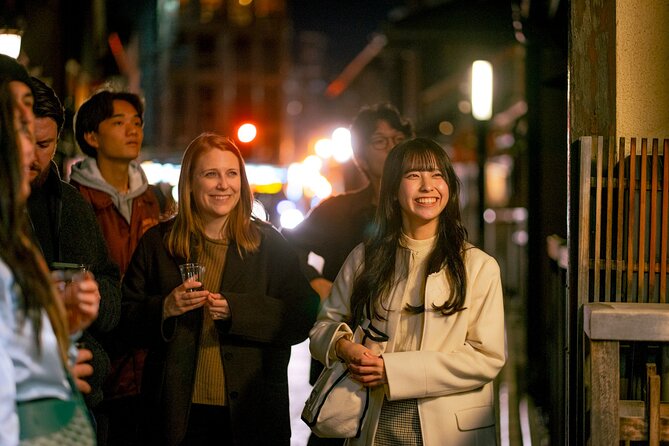
- Small group of up to 10 for a more personal vibe and better questions
- Sake tasting included while you explore the streets and landmarks
- Geisha culture pointers on how and where you might spot geiko and better understand the tradition
- Kamo River + Gion backstreets for an atmospheric start before you hit the shrines
- Yasaka Shrine and Yasaka Pagoda to connect the district stories to major Kyoto landmarks
- Residential-area etiquette matters here, since you’ll be walking through quieter neighborhoods
Why this Gion night walk is worth your time
Night in Kyoto changes everything. Streets that feel ordinary in daylight can feel quietly magical after dark, especially in and around Gion where lanterns and old wooden facades do a lot of the work for you.
The big win is that you’re not just following a map. You’re getting context—stories around geisha culture, and also touches of samurai culture and Zen meditation—so the places start to make sense as you walk.
I also like that you’re holding something that fits the mood: local sake. It’s not just a snack stop; it helps you slow down, stay in the moment, and keep chatting with your guide as you go.
You can also read our reviews of more tours and experiences in Kyoto.


Meeting at Kikunoi Roan and how the route feels
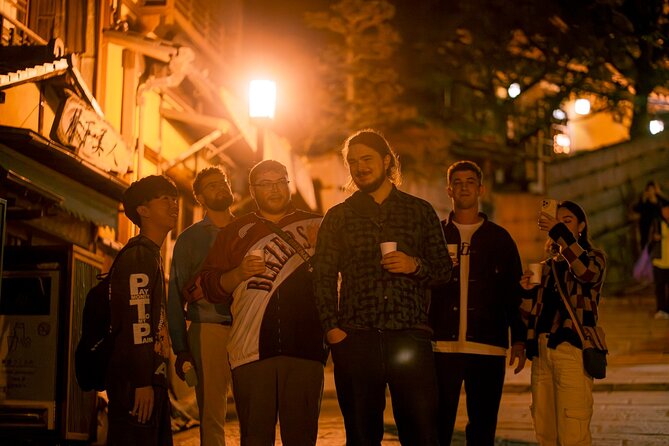
The tour starts at Kikunoi RoanJapan, a spot in central Kyoto (near Shijō area). From there, you’ll walk toward the heart of Gion and then continue into the Higashiyama side to finish at Yasaka Shrine.
Because this runs about 1 hour to 1 hour 30 minutes and involves a lot of walking, you’ll feel the rhythm of the route. It’s not a quick-and-random stroll; it’s a planned sequence that keeps the pace steady without being rushed.
Practical note: this runs in the evening through areas that are residential. The tour asks you to keep your voices down, and that’s good advice in any Kyoto neighborhood—especially at night.
Kamo River pause: calm water before the Gion lanes
Your first stop is the Kamo River, a picturesque stretch that runs through Kyoto. Even when you’re not in cherry blossom season, it’s a great breather because the water and riverside trees give your eyes a rest before the narrow streets.
This is also where you can get your bearings. If you’re hoping for photos, the river area gives you different angles than you’ll get later in the alleys.
One small caution: riverside evenings can feel chilly or breezy. If you get cold easily, bring a light layer even in warmer months.
Gion streets and Hanamikoji: the lanes where tradition shows up
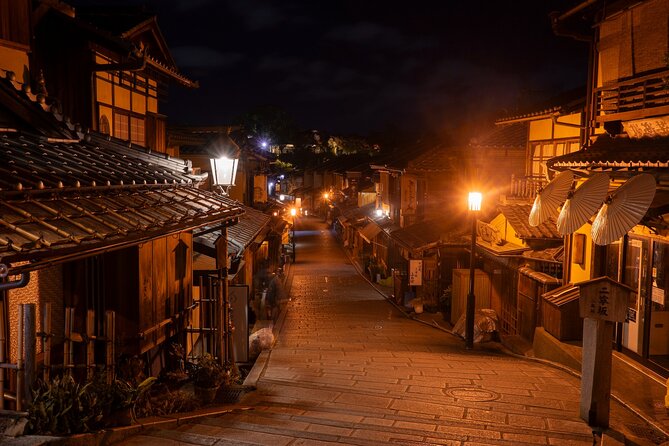
Next you’ll move into Gion, Kyoto’s most famous geisha district. This is where the narrow lanes matter. Walking them with a guide helps you notice things you’d otherwise miss—especially the traditional machiya-style houses and the teahouse atmosphere.
Then you’ll hit Hanamikoji Street, one of the best-known streets in Gion. It’s scenic and photogenic, but it can also be a busier corridor than the side lanes. If you want quieter moments, your guide’s timing and footwork through the neighborhood becomes part of the value.
Here’s the part I think you’ll appreciate most: you’ll get tips on geiko culture and how spotting works without being intrusive. You may see a geiko (or hear activity near teahouses), but you’ll do it the polite way—on the sidewalk, quietly, and with respect for privacy.
Yasui-Konpiragu Shrine: a shrine stop with a clear theme
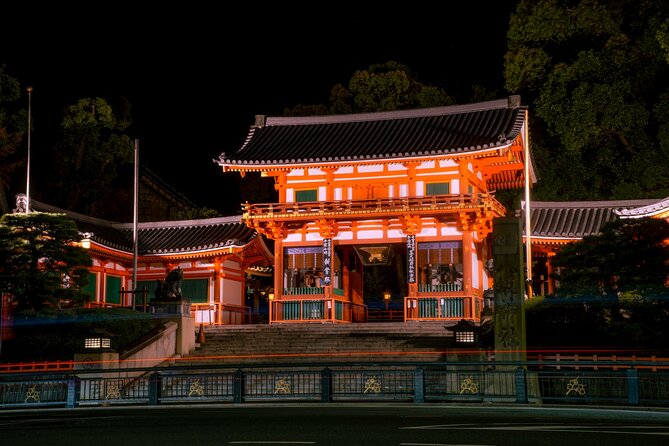
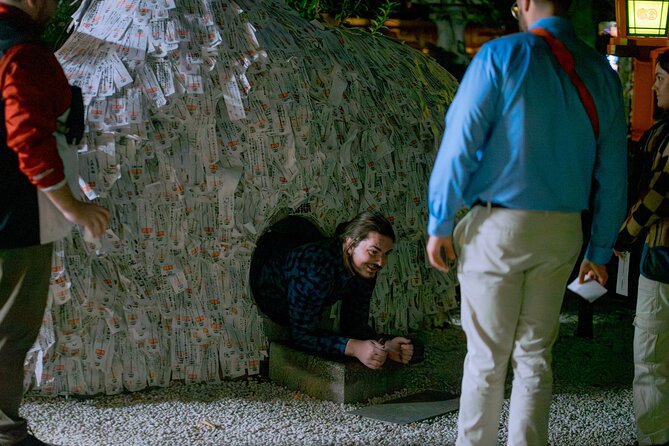
After Gion, you’ll make a shrine-themed stop at Yasui-Konpiragu Shrine. This Shinto shrine is known for its connection to breaking bad relationships and bringing good ones.
It’s a good contrast to the street-level feel of Gion. You get a calmer moment, and the guide can help tie what you’re seeing to why these places matter in Kyoto life.
If you’re the type who likes small “meaning moments” during a walk, this stop delivers. If you’re only interested in architecture, you’ll still get a pleasant pause before the next big landmark.






Hokan-ji (Yasaka Pagoda): the skyline moment

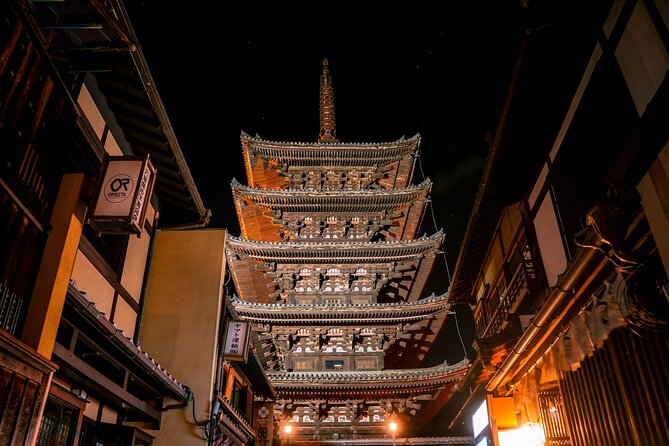
Next is Hokan-ji Temple, also called the Yasaka Pagoda. The highlight here is the five-story pagoda itself and the sense of Kyoto’s old temple presence in the Higashiyama area.
A pagoda like this can look impressive in any light, but at night it tends to feel even more symbolic—like a quiet marker that the district stories are older than any single street. If you like photography, this is one of your best chances for a classic Kyoto shot.
The only drawback is that temple areas can get crowded around peak times. If you’re trying to get a clean photo, don’t expect perfection—just try different angles and be patient.
Sannenzaka and Ninenzaka: the slopes that slow you down

Now you’ll step into the famous pedestrian slopes: Sannenzaka and Ninenzaka. These are historic stone-paved streets where traditional buildings line the walkways.
They’re short stops on the route, but they matter because the terrain changes. You’ll feel the slope underfoot, and that’s a big reason the tour asks for comfortable shoes. If you’re wearing slick soles or dress shoes, swap them before you go.
Also, these streets are typically photogenic and busy during the day. At night, the vibe changes, but the lanes still pack enough foot traffic that you’ll want to move carefully and avoid stopping in the middle of the path.
Nene-no-Michi: the quieter path to catch your breath
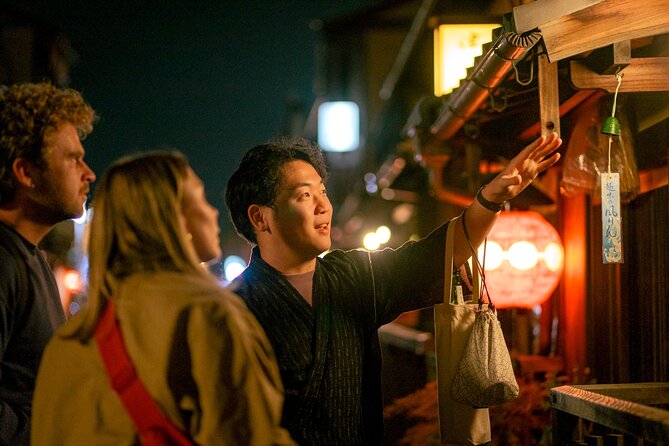
Then comes Nene-no-Michi, a stone-paved path connecting places in Higashiyama. It’s named after Nene, the wife of Toyotomi Hideyoshi, so there’s a built-in historical thread even if you’re just walking for atmosphere.
Compared with the more famous slope streets, this path can feel more relaxed. It’s a good stretch to breathe, reset your legs, and look around without feeling like you’re in a constant crowd.
This is also where your guide’s style shows. Some guides keep things story-driven here, which turns a short walk into a more meaningful one. If you like asking questions, this is usually the part where you can talk comfortably.
Yasaka Shrine finish: where the night wraps up
The tour ends at Yasaka Shrine, also known as Gion Shrine. The shrine dates back to 656 AD, and it’s one of Kyoto’s most important landmarks—so finishing here feels like a natural payoff.
The stop lasts about 20 minutes, which is enough time to see the main areas, soak up the night atmosphere, and get a few last photos. If you’re hoping for a simple wrap-up before dinner plans, this timing works well.
You’ll also want to think about onward transport. The tour notes that the group can help you catch a taxi at the end, since buses may not be running late enough by the time the walk finishes.
Price and value: what $27.84 buys you
At about $27.84 per person, this tour is priced for the time and for what’s included. The most obvious value-add is the sake tasting, which turns the whole walk into something you can’t easily replicate solo without planning.
The second value point is the small group, max 10 travelers. In Kyoto, that matters. You can actually hear the guide, ask questions, and shift your attention from street to street without fighting the crowd dynamic that bigger tours create.
The third value point is the route logic. You don’t just bounce between random highlights. You move from river calm to Gion’s alley structure to major shrine/temple anchors like Yasaka Shrine and Yasaka Pagoda—so you leave with a clearer sense of how these parts connect.
Who this tour suits best (and who should skip it)
This tour fits you if you’re visiting Kyoto for the first time and want to understand Gion beyond the postcard look. It also suits you if you like night walks and you’re interested in learning practical cultural context—especially how geisha districts work and what respectful sightseeing looks like.
It’s also a good choice if you enjoy conversation with a guide. In past experiences with this tour, guides like Mune and Shumpei have been described as friendly and good at answering questions, including differences in daily life and culture.
Skip it if you want a low-walking experience. The route includes slopes and stone-paved streets, and the tour explicitly calls for moderate physical fitness. Also, because alcohol is provided, it’s not a great fit if you’d rather avoid drinking entirely.
Quick etiquette and safety tips for a smoother night
Bring comfortable, grippy shoes. The route includes stone steps and slopes, and your feet will notice the difference after an hour.
Since you’re walking through residential areas at night, keep voices down. This isn’t just polite; it helps you blend in and enjoy the mood without being that loud group.
And with the sake included, drink responsibly. You’re still walking, taking photos, and navigating uneven streets.
Should you book this tour?
Book it if you want a guided night walk that ties atmosphere to meaning—Gion backstreets, geisha culture context, and a finale at Yasaka Shrine, all with a sake tasting that keeps things easygoing. At this price level, the combination of small group + alcohol tasting + strong landmark flow feels like solid value.
Don’t book it if walking at night is a problem for you, if you’re sensitive to alcohol, or if you’d rather browse Gion at your own pace with zero structure. This is a guided route with set stops, and it works best when you’re happy to keep moving.
FAQ
How long is the Kyoto Gion Geisha District & Sake-in-Hand walking tour?
It typically runs about 1 hour to 1 hour 30 minutes.
What is included in the tour besides the walking?
The tour includes guide commentary and a local sake tasting. Alcohol is provided as part of the experience.
Where does the tour start and where does it end?
It starts at Kikunoi RoanJapan (600-8012 Kyoto, Shimogyo Ward, Saitōchō, 四条下る斎藤町118) and ends at Yasaka Shrine (625 Gionmachi Kitagawa, Higashiyama Ward, Kyoto, 605-0073).
Is admission required for the stops?
The listed stops show admission ticket free.
How many people are in the group?
The maximum group size is 10 travelers.
What walking level should I expect?
The tour involves a lot of walking and calls for moderate physical fitness. Comfortable clothing and shoes are recommended.
Is there an age requirement?
Yes. Participants must be 20 years old or older.
What should I keep in mind since the tour goes through residential areas?
Since the route includes residential areas at night, the tour asks you to keep your voices down and be respectful of local residents.
What happens if the weather is poor?
This experience requires good weather. If it’s canceled due to poor weather, you’ll be offered a different date or a full refund.
Can you help with transportation after the tour ends?
Yes. The tour notes that you can request help catching a taxi at the end. It also mentions buses may have stopped running by the time the tour concludes.