Gion turns poetic after sunset. This 90-minute evening walk goes straight into the Geisha district at night with a local guide, a small group, and a cup of local sake as you stroll. I especially like how the route hits Kyoto classics without feeling like you’re trapped in a day-tour crowd—think lantern glow, quiet corners, and photo stops paced for real viewing.
Two things really make this work: the small group (max 10) keeps it conversational, and the guide helps you frame great shots at each landmark instead of just pointing and leaving you to fend for yourself. One thing to plan around: it’s still a walking tour, so if you’ve got back issues, the time on your feet may not be your friend.
In This Review
- Key things to know before you go
- Why Gion after dark hits differently on foot
- The small-group setup (max 10) and why it matters
- Finding the meeting point: Shijo Kiyamachi on Kiyamachi Street
- Hanamikoji Street and your first Gion night photo plan
- Yasui Kompira-gū Shrine: the power stone stop
- Hōkan-ji Temple and the lit-up Yasaka Pagoda (five stories)
- Ninenzaka cobblestones: stepping back in time
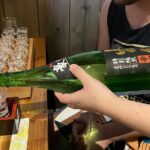
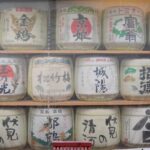
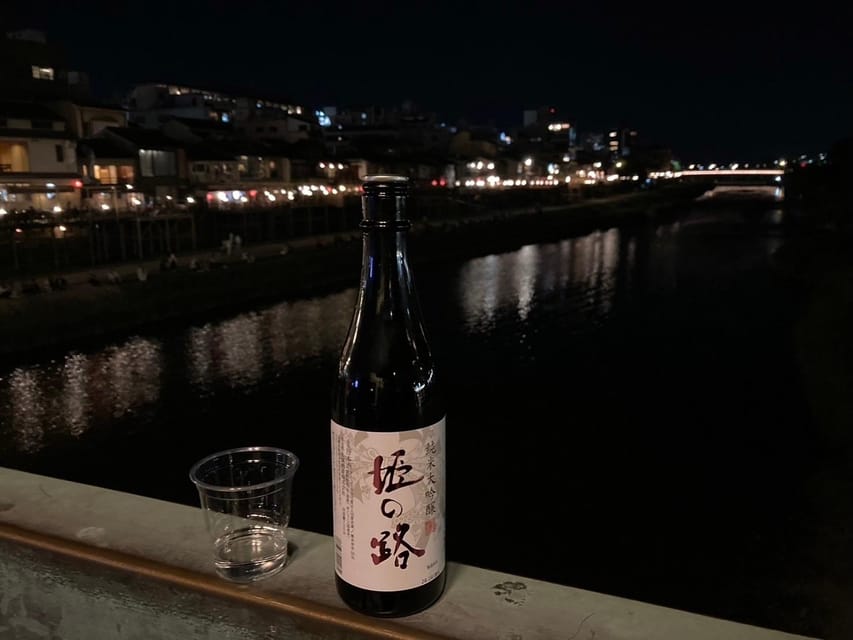
- Sake in hand: why that included drink changes the vibe
- Ending at Yasaka Shrine: a long watch over Gion
- Price and value: is $32 worth 90 minutes with sake?
- Who this tour suits best (and who should skip it)
- Should you book this Kyoto Gion Evening Walk?
- FAQ
- FAQ
- How long is the tour?
- What’s the group size?
- Is the tour offered in English?
- Is local sake included?
- Where does the tour meet?
- What are the main stops on the route?
- Is photo assistance included?
- Is smoking allowed during the tour?
- Is this tour suitable if I have back problems?
Key things to know before you go
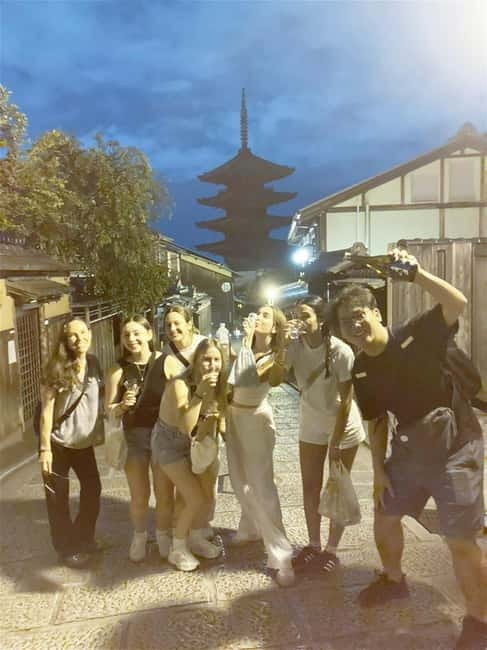
- Gion at night, when Hanamikoji and the lanes feel human-sized
- Yasaka Pagoda (Hōkan-ji) lit up and easier to photograph after dark
- Sake included while you walk lantern-lit streets
- Photo assistance at each major stop so you don’t miss the good angles
- Route ends at Yasaka Shrine, a spiritual anchor that’s been around for over 1,300 years
Why Gion after dark hits differently on foot
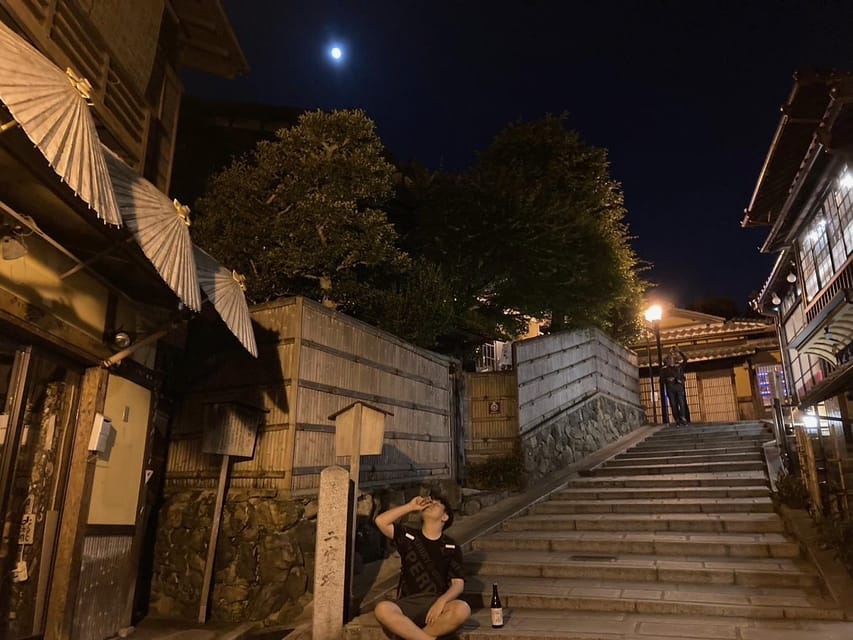
Kyoto’s Gion district has an energy all its own, but daytime can be loud and crowded—fast foot traffic, quick selfies, and a lot of people rushing to the next photo point. This tour shifts the tempo. You’re out when the streets soften, the lanterns take over, and the neighborhood feels more like a lived-in place than a stage.
You’ll spend 90 minutes moving at a relaxed pace through the part of Gion that most people picture: traditional tea-house lined streets, historic temple views, and shrines that look especially dramatic with nighttime lighting. The goal isn’t speed. It’s getting you comfortable in the setting long enough to actually read it—small details, quiet side streets, and how the area’s culture connects to Shinto and Buddhist spaces nearby.
You can also read our reviews of more tours and experiences in Kyoto.


The small-group setup (max 10) and why it matters
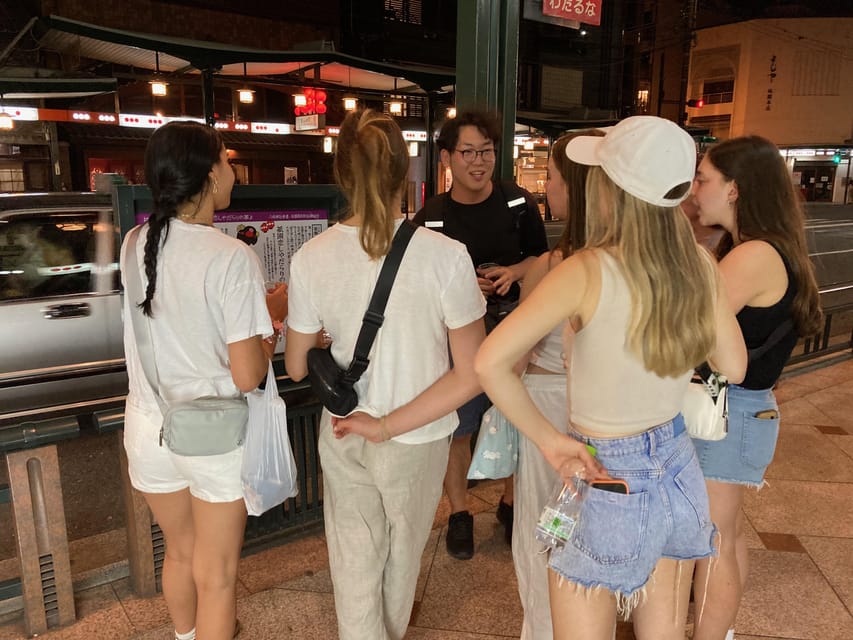
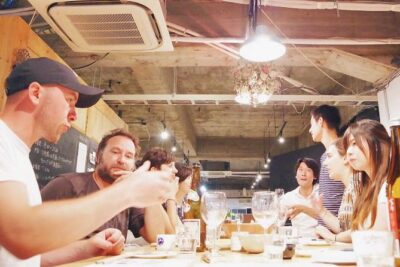
This isn’t a big-audiobook tour. The group is capped at 10 people, which changes everything about the experience. You can ask questions as you go—about Geiko and Maiko culture, what you’re looking at, and what you might want to do next in Kyoto.
I also like that the tour is in English. You’re not left guessing, and explanations stay practical and clear. In previous groups, guides have been described as patient and fun to talk with, and you’ll likely feel the same—especially during the sake moment when conversation naturally turns casual.
One more detail that makes a difference: the guide helps with photos. That means you can focus on the view, not on whether your camera is about to eat another blurry lantern.
Finding the meeting point: Shijo Kiyamachi on Kiyamachi Street
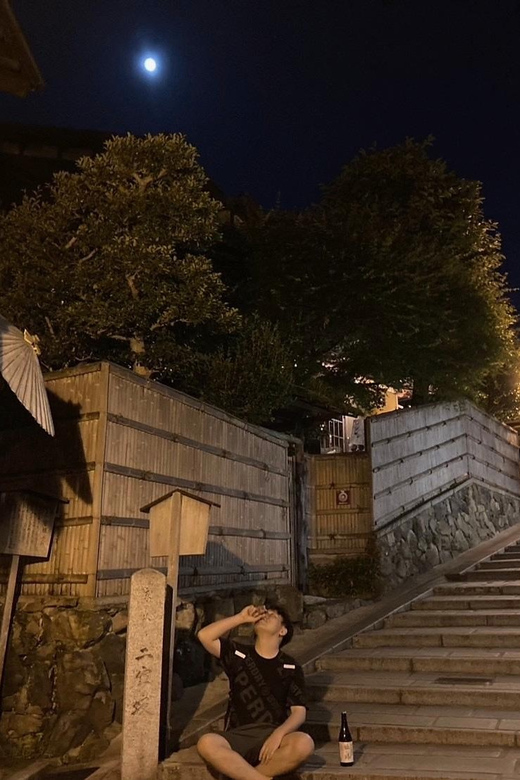
Plan to arrive on time. The tour starts promptly, and timing matters because you’ll be walking through neighborhoods that can get busier later.
Your guide holds a sign that says Otatrip Guide. Meet at Shijo Kiyamachi, between McDonald’s and the Japanese restaurant Kikunoi Roan, a little south along Kiyamachi Street. If there are multiple participants, the group may depart right on schedule—so don’t cut it close.
Hanamikoji Street and your first Gion night photo plan
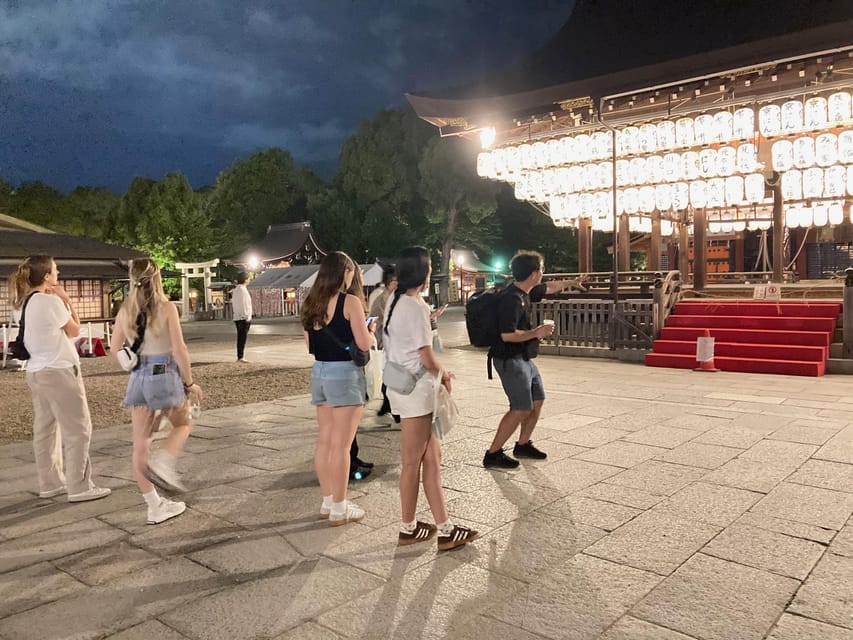
The walk begins in Gion with a stop focused on Hanamikoji Street, Kyoto’s famous Geisha lane. Expect traditional buildings and an atmosphere that feels more intimate at night, when the street turns into a slower, lantern-lit corridor.
This is one of the best places to settle in early. You’ll get your bearings with a photo stop and guided context, then keep moving. If you’re thinking about what to shoot, night photos here usually work best with patience: let your guide show you a composition, then take a couple of steady frames instead of rushing through one shaky shot.
A practical tip: wear comfortable shoes. You’ll be walking through cobblestones and temple approaches later too, so save your feet and you’ll enjoy the whole route more.
Yasui Kompira-gū Shrine: the power stone stop
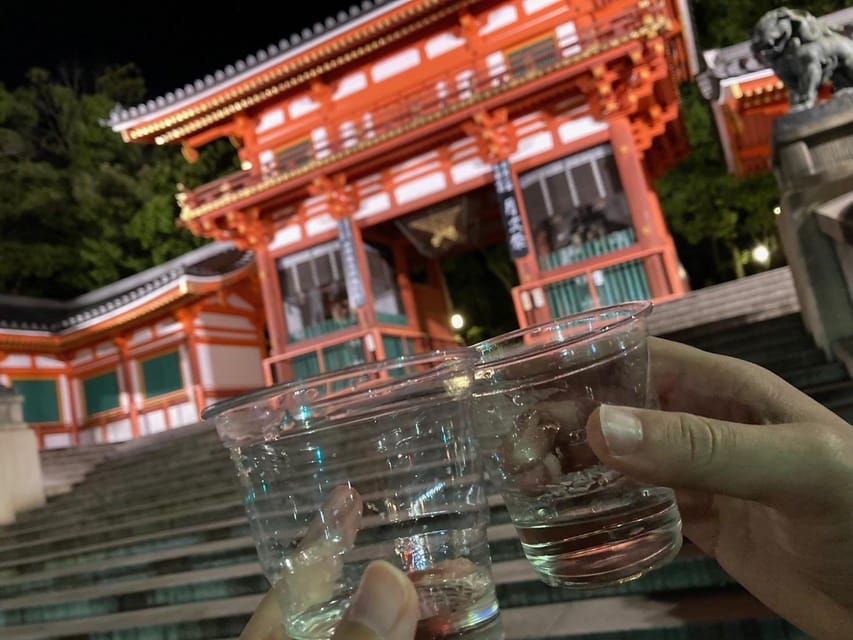
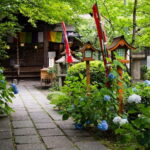
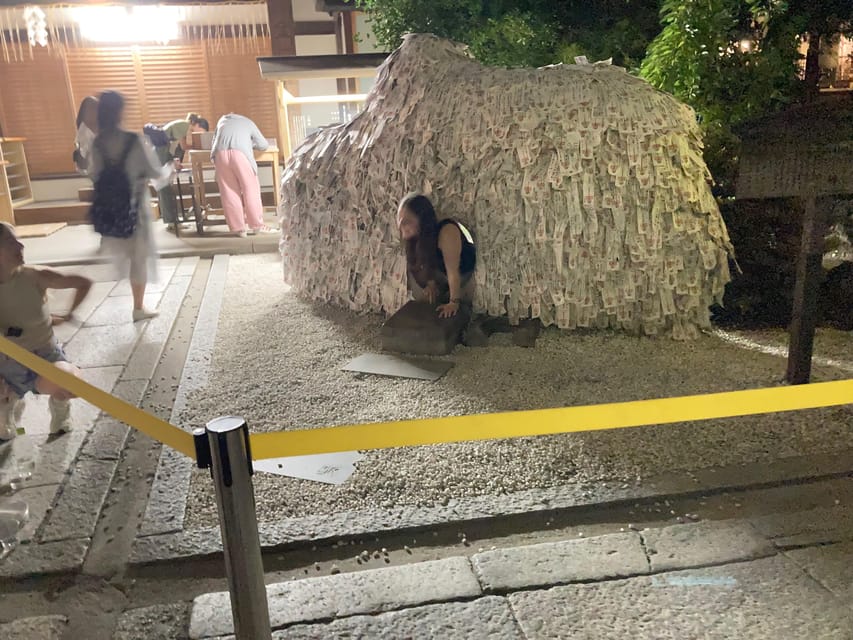
Next up is Yasui Kompira-gū Shrine, known for a unique power stone. The story centers on locals coming to cut bad ties and strengthen good ones. At night, shrines like this feel more still and reflective, and the guide’s explanations help you connect the place to its everyday meaning.
Photo-wise, this stop is less about wide views and more about respectful looking—where to stand, what details to notice, and how to capture the moment without turning it into a tourist stampede. The tour keeps voices low in residential and sacred areas, and that’s not just etiquette theater. It helps the whole experience feel quieter and more genuine.



Hōkan-ji Temple and the lit-up Yasaka Pagoda (five stories)

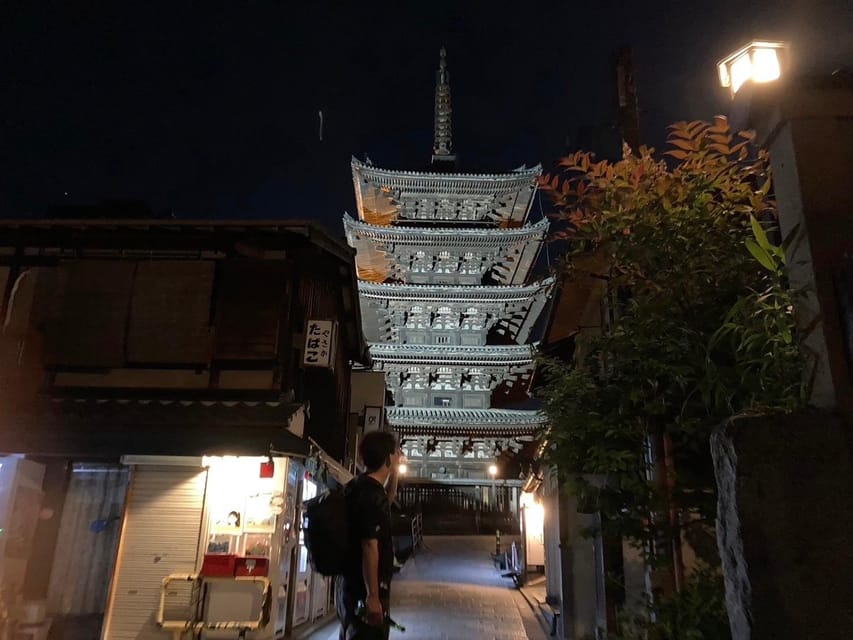
The heart of the night-viewing is the Yasaka Pagoda, part of Hōkan-ji Temple. This is one of Kyoto’s most photographed landmarks, and doing it at night changes the experience. The five-story pagoda is beautifully lit, and it’s far less crowded than during the day.
This stop is also a strong example of why a guide adds value. You don’t just see the pagoda—you learn how to time your shots and where to stand for a cleaner view. The guide’s photo help matters here because nighttime lighting can trick your camera, and the best angles are often a step or two away from where you’d naturally stop.
If you care about photography, treat this like your main event. Take a couple of minutes, follow the guide’s suggested framing, and then do a second pass for a slightly different perspective.
Ninenzaka cobblestones: stepping back in time
After the pagoda, the tour heads to Ninenzaka, a charming cobblestone slope with traditional wooden townhouses. At night, it can feel like you’re walking through an old Kyoto street that’s keeping its own rhythm.
This portion works well because it bridges the big landmarks with a more human-scale atmosphere. You’re not only chasing famous sights—you’re walking the kind of lane that makes Kyoto feel Kyoto. The guide keeps it moving, but it’s not a sprint. You’ll get a photo stop, guided context, and time to look up and around.
If it’s raining, you may get an even quieter mood. One group experience included a rainy night where the streets were unusually calm, and the lantern glow helped the scene feel extra atmospheric. Either way, bring a mindset for wet sidewalks: careful steps and steady pacing will make this segment enjoyable instead of stressful.
Sake in hand: why that included drink changes the vibe
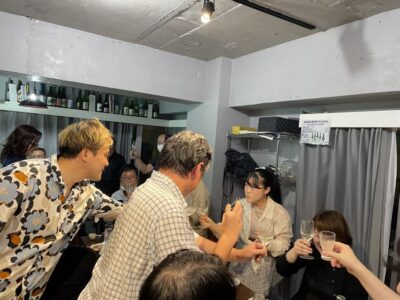
A cup of local sake is included, and it’s timed in a way that feels natural for an evening walk. This is one of those small inclusions that turns a sightseeing loop into a shared moment. It also gives you something to do besides just hold your phone.
Just keep it responsible. You’ll still be walking, so slow down, take small sips, and treat the sake as part of the cultural experience—not a reason to rush your route.
In past groups, the sake touch has been described as generous, and guides have been friendly about keeping people comfortable. That combo usually makes the experience feel less formal and more like you’re out with a local friend.
Ending at Yasaka Shrine: a long watch over Gion
The tour finishes at Yasaka Shrine. This grand shrine has watched over Gion for over 1,300 years, and ending here gives the walk a grounded finish. It’s not just a “last stop for photos.” It’s a place with presence, and the atmosphere at night suits reflection.
By the time you reach Yasaka Shrine, you’ve already seen how religious and cultural life threads through the neighborhood—pagoda lighting, shrine meaning, and the traditional streets between them. The finish point helps you connect the pieces rather than ending abruptly after a single viewpoint.
Price and value: is $32 worth 90 minutes with sake?
At $32 per person for about 90 minutes, the value is mainly in three areas.
First, you’re getting more than “walk and point.” You’re getting a guided explanation of what you’re seeing—Geiko and Maiko culture stories, plus plain-English context for Shinto and Buddhist history tied directly to the stops. That matters because Kyoto’s landmarks are dense with meaning. A map can show you where things are; a guide helps you understand what they represent.
Second, the photo assistance is a real cost-saver. Night photos in old streets are hard. Someone telling you where to stand and how to frame a shot beats trial-and-error every time.
Third, the sake inclusion turns the tour into an experience, not just a route. It’s a small add-on, but it changes the feel of the night.
If you’re comparing costs, think of what you’d pay for a guided evening + photo help + an included drink. For a short time window, this price often lands in a sweet spot—especially if you’re traveling solo or want a social but not crowded setting.
Who this tour suits best (and who should skip it)
This tour is a great match if you:
- Want Gion after dark with less daytime chaos
- Prefer a small group where questions are welcome
- Care about photography and want help placing yourself for the best views
- Like cultural storytelling that stays understandable and practical
- Want an easy evening slot that still feels special
It’s less ideal if:
- You have back problems or struggle with walking longer periods
- You’re expecting a fully seated experience. This is a walking route with multiple stops.
One more note: there’s no smoking allowed, and you’ll want to keep voices low in residential and sacred areas. If you like respectful, low-drama sightseeing, you’ll fit right in.
Should you book this Kyoto Gion Evening Walk?
If your idea of a great Kyoto evening is quiet streets, iconic sights with nighttime lighting, and a guide who keeps the pace friendly, then yes—this is a strong booking. The route is focused, the group size is small, and you get two upgrades many people overlook: photo assistance and sake included.
I’d be extra confident in booking if you’re the type who enjoys asking questions as you go, or if you want a night plan that doesn’t feel like a rushed checklist. If you’re short on time but want Gion’s atmosphere at its best, this is the kind of tour that delivers a meaningful slice of Kyoto—without the daytime pressure.
FAQ
FAQ
How long is the tour?
The tour lasts about 90 minutes, with roughly 70 to 90 minutes walking time.
What’s the group size?
It’s a small group with a maximum of 10 participants.
Is the tour offered in English?
Yes, the live tour guide speaks English.
Is local sake included?
Yes. A cup of local sake is included for you to sip as you stroll.
Where does the tour meet?
Meet at Shijo Kiyamachi. The guide will be holding a sign that says Otatrip Guide between McDonald’s and the Japanese restaurant Kikunoi Roan, a little south along Kiyamachi Street.
What are the main stops on the route?
You’ll cover Gion (including Hanamikoji Street), Yasui Kompira-gū Shrine, Hōkan-ji Temple for the Yasaka Pagoda, Ninenzaka, and then finish at Yasaka Shrine.
Is photo assistance included?
Yes. Photo assist is included at key locations, and the guide helps you capture great photos.
Is smoking allowed during the tour?
No, smoking is not allowed.
Is this tour suitable if I have back problems?
It’s not suitable for people with back problems, since it’s a walking tour.