REVIEW · NARA
Private Nara Tour and Sake Tasting (Departing from Kyoto/Nara)
Book on Viator →Operated by OTAKU hopper · Bookable on Viator
Nara without crowds is a real treat. This private morning route gets you to Nara’s big names early, then strings them together in a smooth walking plan that leaves time to linger and actually look. I also love that you’ll get photo help during the day, and that the guide can be someone like Ikki, who keeps the pace efficient while staying friendly and funny.
The main catch: it’s still a walking tour, so plan for a solid half-day of steps. From Kyoto it runs closer to about 6 hours, and if you add the optional sake tasting you’ll need an extra 30 minutes.
In This Review
- Key things that make this tour a strong choice
- Why Nara is best when you start early
- Price and what you’re really paying for
- Meeting at Kintetsu-Nara: the start point that keeps things efficient
- The walking route: Kofuku-ji, Todai-ji, and the “big wow” chain
- Stop 1: Kofuku-ji and that five-story pagoda presence
- Stop 2: Todai-ji and the Great Buddha scale you can’t fake
- Stop 3: Nigatsu-do for views and the Omizutori story
- Stop 4: Tamukeyama Hachimangu, a compact shrine with a deep anchor
- Stop 5: Nara Park deer time that stays fun instead of chaotic
- Stop 6: Kasuga Grand Shrine and its lantern wall of attention
- Stop 7: Harushika Brewery and optional sake tasting (700 yen)
- Guide power: why Ikki-style energy makes this day easier
- Timing from Kyoto vs. starting in Nara
- Who this tour fits best (and who might not love it)
- Final verdict: should you book this private Nara tour?
- FAQ
- How long is the tour?
- Where does the tour start and end?
- What’s included in the price?
- Are other temple/shrine entrances included?
- How much is the sake tasting?
- Is there a difference if I start from Kyoto?
- Is this a walking tour?
- Will I get photos from the guide?
- Is this tour private?
- What happens if I’m late?
Key things that make this tour a strong choice
- Private and small-group feel: only your group participates, so you’re not stuck in a crowd shuffle
- Morning strategy: you see Todai-ji and Nara Park before the heaviest rush
- Temple hits in a smart order: Kofuku-ji to Todai-ji to Kasuga Taisha without backtracking
- Deer time built in: you get a clear block at Nara Park for feeding and photos
- Optional Harushika sake tasting: 700 yen on request, with room in the schedule
- Professional photos during the experience: you’re not just taking selfies all day
Why Nara is best when you start early
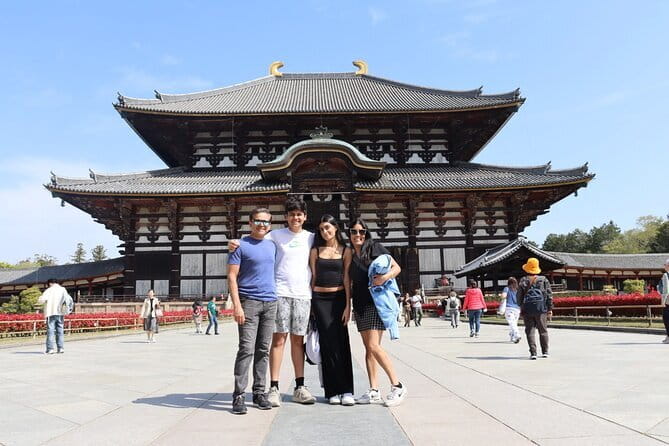
Nara can feel like two different places depending on the time of day. Early morning, it’s calmer, and the temples and shrine grounds feel more like sacred spaces you walk through. Later, it turns into a theme-park line system where you spend more time waiting than seeing.
This tour leans into the early window. You start at Kintetsu-Nara Station, then work through the highlights while the light is better for photos and the crowds are still forming. That matters at Todai-ji and around Nara Park, where everyone wants the same photo angles with the same deer.
You can also read our reviews of more tours and experiences in Nara.
Price and what you’re really paying for
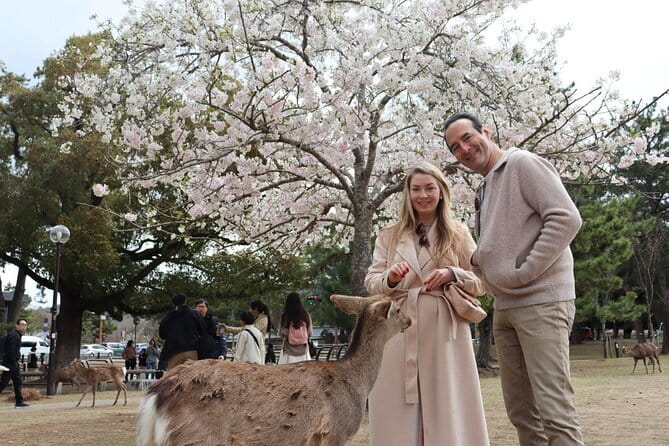
At $165.13 per person, this isn’t the cheapest way to do Nara. But it can be a smart value if you compare what you get versus DIY.
Here’s the value equation I’d use:
- You’re paying for a private, English-speaking guide and a route that saves time.
- Todai-ji admission (800 yen) is included, so you’re not spending energy on tickets for that main stop.
- You also get professional photos taken during the experience, which is the kind of add-on that usually costs extra if you hire it separately.
- If you’re coming from Kyoto, remember there’s an extra ¥1,280 public-transport fare per person (listed as applicable for Kyoto departures). So check the total in your head.
If you’re traveling with kids, couples, or a small group that wants less planning, the guide’s time can easily offset the higher price. If you’re the type who loves riding transit solo and you already know the sights, DIY might still be cheaper. But the “cheap” option often turns into the “long day” option.
Meeting at Kintetsu-Nara: the start point that keeps things efficient
The meeting point is Kintetsu-Nara Station (Nishimikadochō, 東向中町29), and the tour ends right back there. That is a practical detail you’ll appreciate because it reduces the stress of figuring out how to get home after temples and deer.
It’s also described as near public transportation, which matters if you’re juggling rail timing from Kyoto or local hops from Osaka. Bring your IC card (or be ready to get one), because you’ll use trains and then do plenty of walking once you’re on foot.
One more practical note: the tour is designed around arriving on time. If you’re late, you may not be able to join, and refunds aren’t part of the plan—so aim to show up earlier than you think you need.
The walking route: Kofuku-ji, Todai-ji, and the “big wow” chain
This itinerary is built like a greatest-hits album, but with breathing room. The stops are close enough to connect by foot and short transit moves, so you’re not losing half the day to travel logistics.
It also works because each stop adds a different flavor of Nara:
- Kofuku-ji gives you a dramatic pagoda moment.
- Todai-ji delivers the iconic Great Buddha scale.
- Nigatsu-do adds a view and a seasonal tradition you can picture even if you’re not there in March.
- Kasuga Taisha flips the mood with lanterns and shrine atmosphere.
And you still get the very Nara part: Nara Park with deer.
Stop 1: Kofuku-ji and that five-story pagoda presence
Kofuku-ji Temple is a UNESCO World Heritage site and it’s famous for its iconic five-story pagoda, noted as the second tallest in Japan. The stop is about 15 minutes, and admission is free.
Why this works on a half-day tour: you get the visual signature of Kofuku-ji without getting trapped in a long timeline. The pagoda is the kind of landmark you notice instantly, even if you don’t know the full story behind it. It’s a quick “I’m really in Nara” moment that sets the stage for what comes next.
Stop 2: Todai-ji and the Great Buddha scale you can’t fake
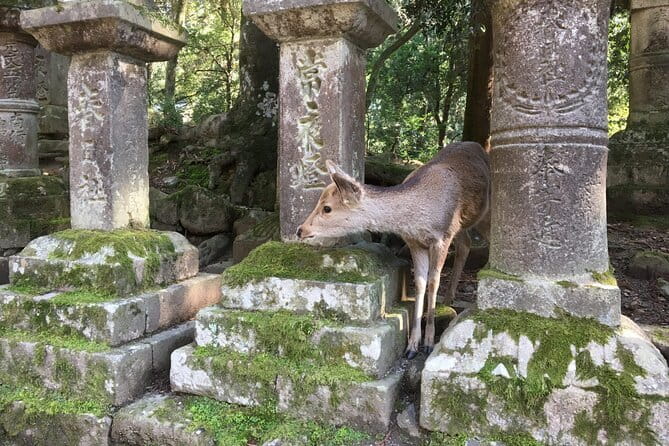
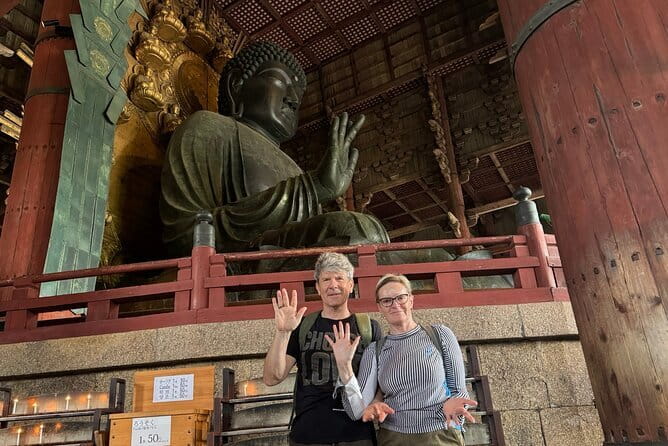
Todai-ji Temple is the headline. It’s UNESCO World Heritage, and it’s home to the Great Buddha (Daibutsu), described as one of the largest bronze Buddha statues in the world. The schedule gives you about 30 minutes, and Todai-ji admission (800 yen) is included.
What you should expect: the main hall space is massive, and the Buddha looks even larger once you stand far enough back to take in the full size. The tour time is long enough for more than one look, and your guide can help you focus on what to see first, rather than making you figure out your own route inside an enormous complex.
If you care about photos, this is where your guide’s pacing and “best spots” advice matters most. Multiple recent tour experiences emphasize how the guide helps with deer photo timing too, and that same photo-minded approach usually carries into temple stops.
Stop 3: Nigatsu-do for views and the Omizutori story
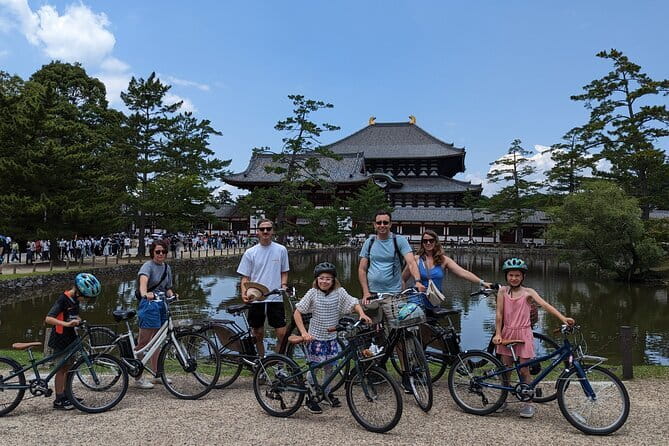
Nigatsu-do (Niigatsudo) is part of Todai-ji and it’s your short stop for scenery. You get about 15 minutes, and admission is free.
This area is known for views of Nara and for the Omizutori ceremony, held every March. It’s described as over 1,200 years old, and it uses torch-lit rituals to mark the arrival of spring. Even if you’re not visiting in March, it helps to understand that you’re standing in a place where traditions are long and serious.
The time here is brief, so don’t expect to fully tour everything. Instead, use those 15 minutes to get your bearings and enjoy the overlook feeling.
Stop 4: Tamukeyama Hachimangu, a compact shrine with a deep anchor
Tamukeyama Hachimangu Shrine sits on the eastern side of Nara Park near Todai-ji. It’s about a 15-minute stop with free admission.
It’s founded in 749 and dedicated to Hachiman, described here as the guardian deity tied to Todai-ji and the region around it. If you like Shinto context, you’ll enjoy how this stop connects the sacred geography across Nara’s biggest landmarks.
This stop also helps you rest your legs. It’s not just temple time in a row; it’s a different atmosphere: shrine grounds, calmer space, and a break before the deer and the broader park area.
Stop 5: Nara Park deer time that stays fun instead of chaotic
Nara Park is where your camera will work overtime. You’ll get about 20 minutes here, and admission is free.
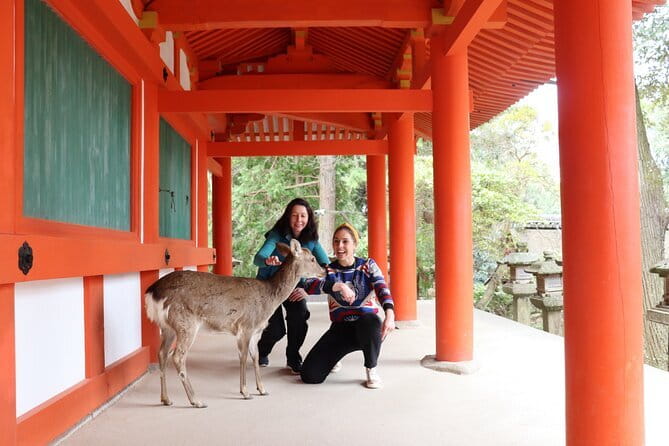
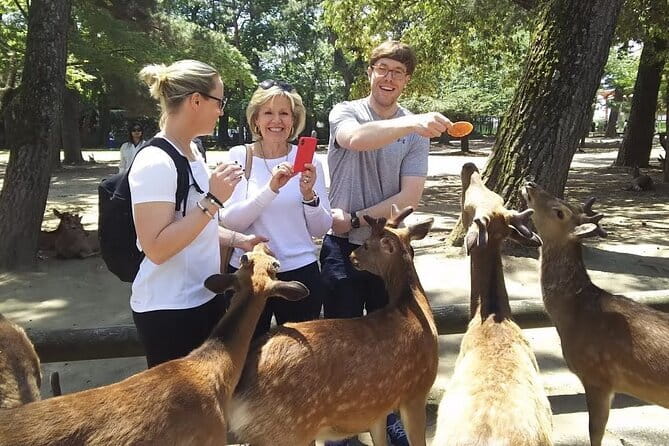
The deer are famous for roaming freely, and the tour specifically includes a chance to feed them. That one detail changes everything. You’re not just watching from behind barriers; you’re interacting in a controlled, guided way.
A good guide matters because deer photos can turn into a stressed scramble fast. In tour experiences, the guide is praised for being patient with deer photos and helping guests get great shots without rushing. If you’re traveling with kids, this part is often the favorite, because it’s immediately memorable and not just museum-style sightseeing.
Quick practical mindset: keep your attention on your guide and the space around you. Deer are curious, but that doesn’t mean you should treat it like a photo shoot where you block pathways.
Stop 6: Kasuga Grand Shrine and its lantern wall of attention
Kasuga Taisha (Kasuga Grand Shrine) is another UNESCO World Heritage site and a key spiritual stop. The tour allots 30 minutes, with free admission.
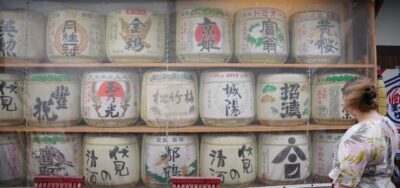
What makes it special is the sheer visual density of its lantern tradition: the shrine is known for hundreds of stone and bronze lanterns. It’s also dedicated to the deity of the Fujiwara clan, and the tour gives you enough time to sense why this shrine feels so “human-sized” even with all that monumental symbolism.
This stop is also a good pace reset. After deer and big Buddha scale, you’ll feel the shift back into shrine mood—less “world’s biggest” and more “take your time and notice details.”
Stop 7: Harushika Brewery and optional sake tasting (700 yen)
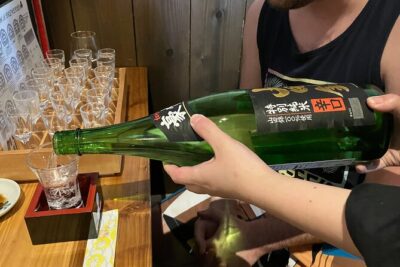
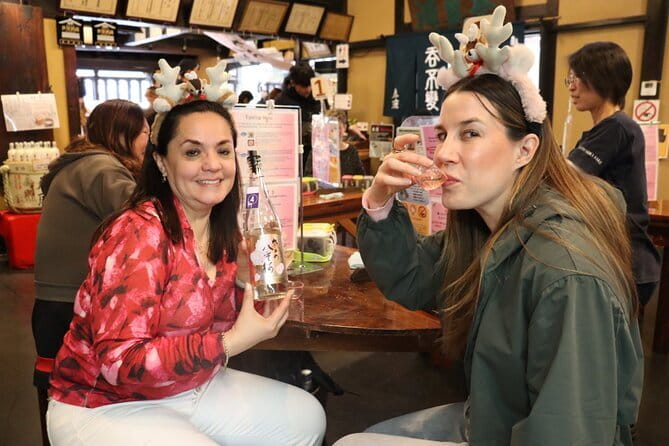
Your final structured stop is Harushika Brewery for about 30 minutes, and the standard stop has free admission listed for this segment. Sake tasting is optional, costing 700 yen per person.
If you do the tasting, the tour adds about 30 minutes to your total schedule. That’s important if you’re trying to keep the day tight back to Kyoto.
The brewery is described as producing high-quality sake using traditional methods, with a rich, smooth flavor profile. Since the tasting is optional, you can decide based on your day’s energy and whether you have a late train.
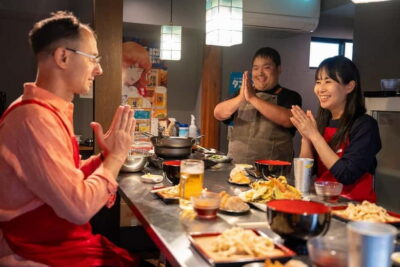
What I like about ending here: it feels like a reward after the walking. You’ve covered temples and shrines and then you finish with something local you can actually taste.
Guide power: why Ikki-style energy makes this day easier
The consistent theme in the best experiences from this tour isn’t the temples. It’s the guide.
Guides like Ikki are highlighted as friendly, patient, and funny, with English that makes the day feel fluid rather than lecture-y. Guests also note that the day feels efficient, with lots of ground covered but without the “hurry up” vibe.
There’s also practical help that you don’t get from a self-guided plan:
- helping you find the right photo spots at the right times
- pacing stops so you can rest, linger, or shop a bit
- assisting with rail navigation, and even practical things like getting an IC card when needed (this kind of real-world help shows up in real tour stories)
If you want Nara to feel effortless, this is the part you’re paying for.
Timing from Kyoto vs. starting in Nara
Duration depends on your departure point:
- about 6 hours if you depart from Kyoto
- about 4 hours if you depart from Nara
Also, choosing the sake tasting adds around 30 minutes.
This affects your planning more than you might think. From Kyoto, you’ll want a calmer evening buffer afterward. From Nara, the day is short enough that you can still add lunch, a stroll, or a second look at park areas you didn’t fully absorb.
Who this tour fits best (and who might not love it)
This private morning format is a strong match for:
- first-time visitors who want the essentials plus good context
- families who need patience during deer-photo moments
- couples who want a guided day but still want freedom to pause
- anyone who hates crowd stress and prefers an early start
It may be less ideal if you:
- have limited mobility or hate walking (it’s designed as a walking experience using public transportation)
- want a slow, stop-anywhere day with lots of unstructured time
- don’t like paying for guide time and would rather travel totally independently
Final verdict: should you book this private Nara tour?
If you want Nara’s big icons—Todai-ji, Kasuga Taisha, and Nara Park deer—without wrestling crowds or figuring out the best order, I’d book it. The value shows up in three places: early timing, guide help, and professional photos.
I’d especially choose it if you’re traveling from Kyoto and you want the day to feel organized. If you’re already staying in Nara with lots of time, you could DIY—but this tour is built to compress the best moments into a half-day that feels balanced instead of rushed.
FAQ
How long is the tour?
It’s listed as 4 to 6 hours approximately, depending on whether you depart from Nara or Kyoto. If you add the sake tasting, plan an extra 30 minutes.
Where does the tour start and end?
The meeting point and end point are both Kintetsu-Nara Station.
What’s included in the price?
The tour includes a passionate local English-speaking guide, Todai-ji Temple entrance fees (800 yen), and professional photos taken during the experience.
Are other temple/shrine entrances included?
Other stops are listed with free admission tickets for this experience (such as Kofuku-ji, Nigatsu-do, Tamukeyama Hachimangu, Nara Park, and Kasuga Grand Shrine).
How much is the sake tasting?
Sake tasting at Harushika Brewery is 700 yen per person and is optional.
Is there a difference if I start from Kyoto?
Yes. A public transportation fare of ¥1,280 per person is noted as applicable only for departures from Kyoto, and the duration is closer to about 6 hours.
Is this a walking tour?
Yes. It’s designed as a walking experience, using public transportation and plenty of time on foot.
Will I get photos from the guide?
Yes. Professional photos will be taken during the tour.
Is this tour private?
Yes. It’s a private tour/activity, so only your group participates.
What happens if I’m late?
If you’re late for the meeting time, you won’t be able to join the tour and you may not receive a refund.