REVIEW · TOKYO
Japanese Sake Tasting and Masu Crafting Experience in Tokyo
Book on Viator →Operated by Manga lesson by Professional Manga artists · Bookable on Viator
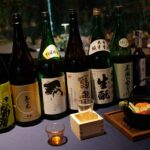
Five sips, then a cup you can keep. I love the English explanation of how sake works plus the chance to taste kanzake (hot sake) and see how temperature changes what you taste, and you also get light snack pairings that actually help you notice differences. One thing to consider: there are no vegetarian or vegan options, though allergy-friendly choices are available if you tell them in advance.
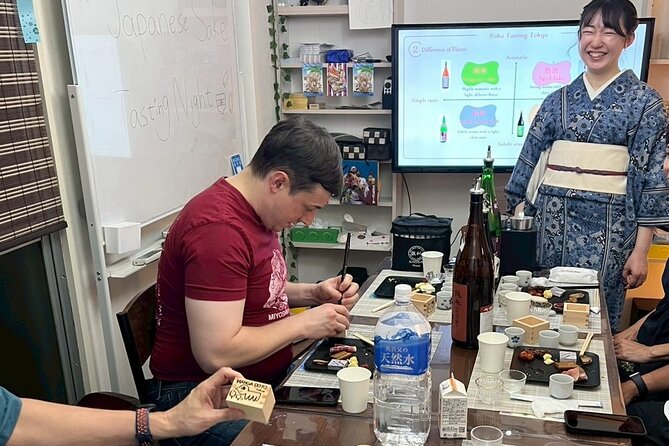
This is held at Manga Dojo Tokyo, a cozy creative space just a few minutes from Ikebukuro Station, and the group stays small (up to 8). You’ll get hands-on sake education from the host, then finish with a fun craft: decorating your own traditional wooden masu cup with Japanese brush pens, so the experience doesn’t end when the tasting does.
In This Review
- Key highlights to know before you go
- Sake, snacks, and a masu cup in Ikebukuro
- Inside the 90-minute session: from sake basics to tasting
- 5–6 sakes, including hot kanzake that changes everything
- Snack pairings that make the flavors click
- Decorate your own masu cup: a souvenir with real meaning
- Price and value for $60 in Tokyo
- Who should book this sake and masu workshop
- A few practical considerations before you go
- Should you book this tour?
- FAQ
- Where is the meeting point and what time does it start?
- How long is the sake tasting and masu decorating experience?
- How many people are in the group?
- What will I taste during the session?
- Are snacks included, and is there a vegetarian or vegan option?
- Is the experience conducted in English?
- What do I make and take home?
- Is there an age requirement for alcohol?
Key highlights to know before you go
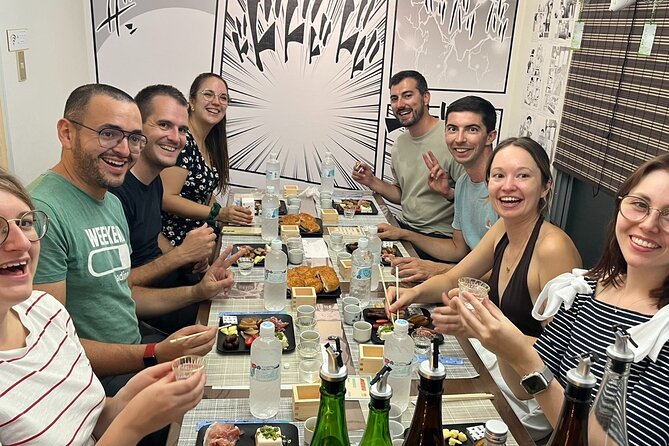
- Small group size (max 8): easier conversation and quicker help as you learn how to taste.
- Tastings of 5–6 sakes: you compare styles side by side instead of just sampling one.
- Hot sake included: you get a real taste of how warmth shifts aroma and flavor.
- Snack pairings: the food is light but chosen to support what you’re tasting.
- You keep your masu cup: brush-pen decorating makes it a personal souvenir.
- Manga-themed space near Ikebukuro: a creative setting that makes the learning feel relaxed.
Sake, snacks, and a masu cup in Ikebukuro
If Tokyo feels like a blur of neighborhoods, this experience gives you a focused pocket of culture in the middle of it. The venue is Manga Dojo Tokyo in Higashiikebukuro, and it’s close to Ikebukuro Station, so you’re not forced into a long commute or complicated transit on a weeknight.
What I like most is that it’s not just a tasting. You’re also learning how sake is made and how to taste it, then you apply that knowledge immediately while sipping different styles. Add the snack pairings and the masu craft at the end, and you leave with both a mental map of sake and something tangible you made yourself.
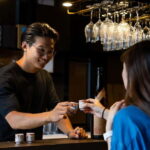
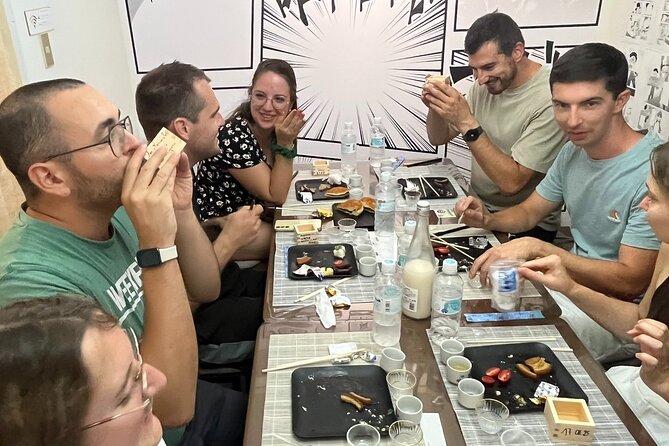
You also get a social, friendly vibe. Even if you’re traveling solo, the small size and the guided flow make it easier to talk with the people next to you without awkwardness.
You can also read our reviews of more tours and experiences in Tokyo.

Inside the 90-minute session: from sake basics to tasting
Plan for about 1 hour 30 minutes. The session starts at 6:00 pm, and it ends back at the same meeting point. You’ll use a mobile ticket, and you’ll check in at Manga Dojo Tokyo before the host brings you into the tasting area.
Here’s the rhythm you can expect:
1) Welcome and the quick sake lesson
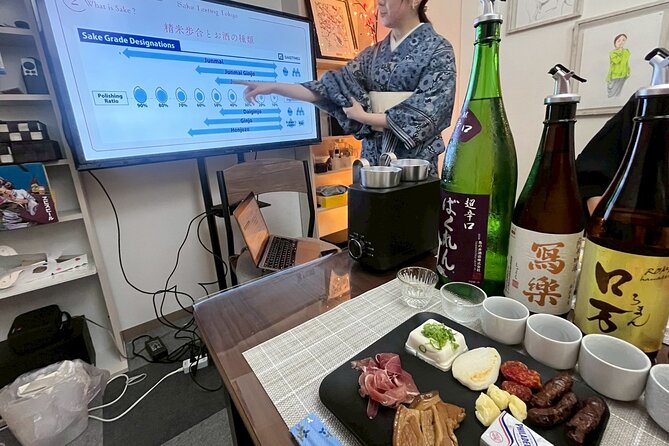
Your host explains the basics of sake, including how it’s produced and what makes different styles unique. You also get guidance on how to taste, which matters more than you might think. Sake tasting is less about “which one is best” and more about training your nose and palate to notice things like aroma, sweetness/dryness, and how the finish feels.
2) Guided sampling, step by step
After that intro, you move into the tasting portion. The guide doesn’t just hand you a cup; they cue you on what to pay attention to. That makes the comparisons much clearer, especially for first-timers.
3) Snacks that work with each pour
Between sake samples, you’re served light snacks designed to pair. This is one of the most practical parts of the experience. It turns tasting into a real “taste + adjust” exercise instead of a passive drinking session.
4) Craft time: decorating your masu
The final stretch is hands-on. You decorate a traditional wooden masu cup using Japanese brush pens. It’s a creative cooldown after the tasting and a way to slow down and take in what you learned.
The whole format is built to be beginner-friendly. You don’t need special vocabulary to enjoy it, but you do walk away with clearer language for what you liked.
5–6 sakes, including hot kanzake that changes everything
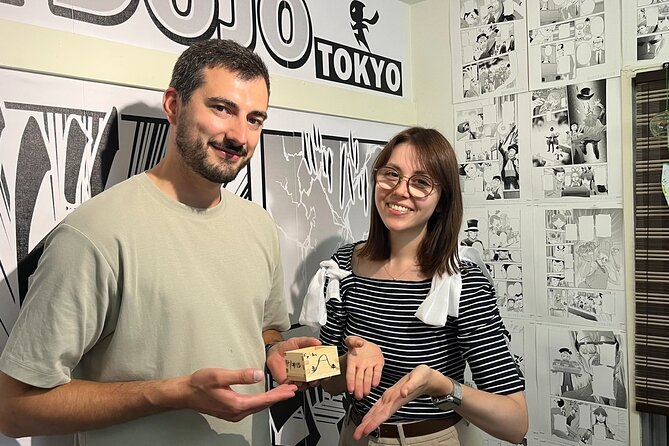
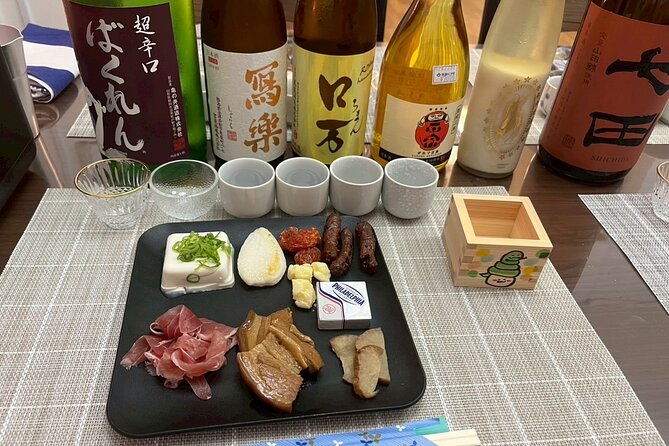
You’ll sample 5–6 distinct sake varieties. The exact lineup can vary, and the menu may change by season, so don’t expect every bottle type every time. But the structure is consistent: you’ll compare multiple styles across different tasting conditions.
A standout detail is that the tasting includes hot sake (kanzake). This is more than a novelty. Temperature can shift aroma dramatically. Warm sake often feels rounder on the palate and can highlight different notes than the same sake at a cooler temperature. Even if you’re new to sake, you’ll likely notice that one or two samples “feel” completely different once warmth is involved.
That’s why this experience is better than a single-sake stop. You get contrast. You don’t have to guess whether you like sake in general—you get evidence about what style you actually enjoy.
Snack pairings that make the flavors click
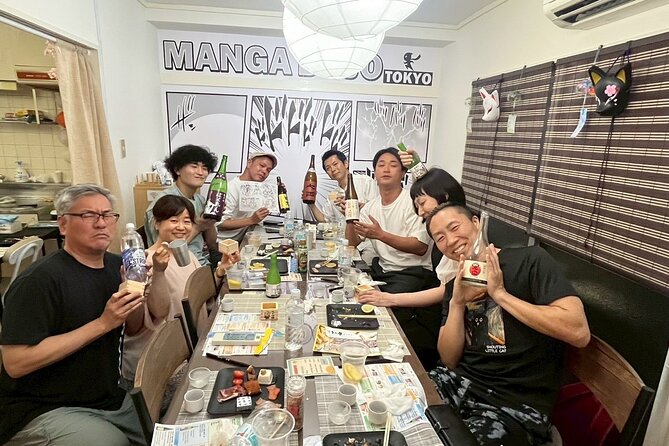
The tasting is paired with light snacks, and they’re chosen to support what you’re tasting. From the experience descriptions and feedback, the snacks tend to be fun, varied, and sometimes surprising in a good way.
One example that comes up in feedback is a pairing involving curry bread with sake. That might sound unexpected, but it points to the larger idea: the snacks aren’t there to “fill you up.” They’re there to help your brain connect aroma and taste. The salty, savory elements can sharpen your awareness of sweetness, dryness, and the way each sake finishes.
There’s also a practical note here. The tour doesn’t promise a full meal, but the pairing snacks do help keep the experience comfortable while tasting multiple pours. If you’re planning dinner afterward, you might still want something later, but you won’t feel like you went in empty.
Diet note to keep in mind: there are no vegetarian or vegan options. If you have food allergies, allergy-friendly options are available, but you need to inform the team in advance.
Decorate your own masu cup: a souvenir with real meaning
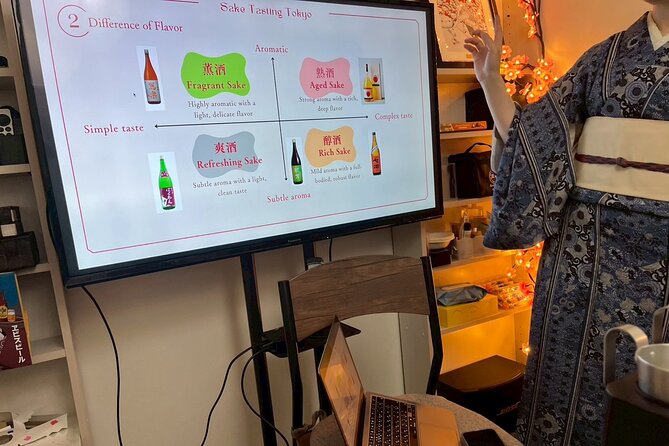
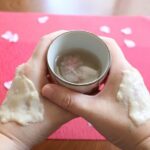
The craft portion is the part I’d recommend even for people who think they’ll only tolerate the drinking. You decorate a traditional wooden masu (a sake cup) using Japanese brush pens. When it’s done, you take the cup home.
That matters because it ties the story together. You’re not leaving with a random souvenir. You’re carrying a cup that represents what you learned in the room: how to pay attention, how temperature and style change flavor, and how Japanese food culture often pairs tastes intentionally.
You’ll also likely enjoy the setting. The space is described as part of a manga lesson environment, and people mention a manga atmosphere and exhibits in the room. It doesn’t turn the sake event into a gimmick—it just makes it feel creative and relaxed, like you’re doing an activity rather than attending a stiff lecture.


Price and value for $60 in Tokyo
At $60 per person, this isn’t a “grab a drink and go” price. You’re paying for a guided, structured tasting plus snacks and a take-home craft item.
Here’s why it often feels like good value in practice:
- Multiple sakes included (5–6). If you were to buy several small pours elsewhere, the cost adds up quickly.
- You get explanation, not just sampling. Learning how to taste is what makes future sake shopping easier and more fun.
- Snacks are part of the program, meaning you’re not juggling restaurant logistics mid-experience.
- You keep the masu, and craft materials are built into the session.
If you’re the type of traveler who likes experiences where the “product” is partly educational, this one has strong value. You’re not just consuming; you’re building taste memory.
If you’re only interested in drinking and don’t care about learning, you might question the price. But the structure is designed so the learning is quick, clear, and tied directly to each pour.
Who should book this sake and masu workshop
This is a great fit if you:
- like trying multiple styles instead of committing to one
- want a low-pressure beginner introduction to sake
- enjoy small-group cultural activities where you can ask questions
- want an evening plan near Ikebukuro
- are into Japanese pop-culture spaces, since the venue has a manga-focused creative feel
It’s also a smart choice for couples and small groups. A small max group size means it’s easier to share the experience without feeling lost in a crowd.
If you’re traveling with dietary needs, plan ahead. The lack of vegetarian/vegan options means you’ll want to confirm what’s available through allergies support before booking.
A few practical considerations before you go
Alcohol rules matter here. Under Japanese law, drinking alcohol is prohibited for anyone under age 20. If your group includes anyone close to that age, make sure you’re comfortable with the policy.
Also, your experience includes alcohol, so you’ll want to pace yourself. Since you’ll taste multiple sakes, it’s a good idea to drink water between samples if you’re someone who gets tipsy quickly.
Finally, remember that the tasting menu can vary by season. That’s usually a plus, not a minus. It means you’re likely getting something adjusted rather than a frozen lineup year-round, but it also means you can’t plan the exact sake names ahead of time.
Should you book this tour?
Yes, if you want a compact Tokyo evening that combines real sake education, practical tasting comparisons, and a creative souvenir. The hot sake element is especially useful if you’ve only ever had sake cold elsewhere, because it gives you a clear before-and-after in the same session.
I’d book this even if you’re new to sake, because the format is built around guided tasting and snack pairings that help you connect what you taste to why it works. The small group size (up to 8) also makes it feel approachable.
Skip it only if vegetarian/vegan needs can’t be accommodated or if you strongly prefer alcohol-free experiences.
If you do book, take advantage of the fact that it starts at 6:00 pm. It’s an easy add-on to a day of Ikebukuro exploring and a good alternative to another dinner stop when you want something more hands-on.
FAQ
Where is the meeting point and what time does it start?
The experience starts at Manga Dojo Tokyo, located in Higashiikebukuro (170-0013 Tokyo, Toshima City, Higashiikebukuro 1-chōme 316 三昌ビル 602). The start time is 6:00 pm, and the activity ends back at the same meeting point.
How long is the sake tasting and masu decorating experience?
It runs for about 1 hour 30 minutes.
How many people are in the group?
The tour has a maximum of 8 travelers.
What will I taste during the session?
You’ll sample 5–6 different sake varieties, including at least one hot sake.
Are snacks included, and is there a vegetarian or vegan option?
Light snacks are included and are paired with the sake. There are no vegetarian or vegan options, but allergy-friendly options are available if you inform the team in advance.
Is the experience conducted in English?
Yes, the session is conducted in English.
What do I make and take home?
You decorate your own traditional wooden masu cup using Japanese brush pens, and you take it home as a keepsake.
Is there an age requirement for alcohol?
Yes. Under Japanese law, drinking alcohol is prohibited for anyone under 20.
Cancellation note (brief): free cancellation is available if you cancel at least 24 hours before the start time for a full refund.