REVIEW · TOKYO
Wagyu & Sake Pairing in Shinjuku – Steak, Shabu-Shabu & More
Book on Viator →Operated by Ninja Food Tours · Bookable on Viator
Tokyo can be overwhelming at dinner time, especially if you do not read Japanese. This Shinjuku wagyu and sake pairing turns that into a guided food adventure, with a course-by-course match that helps you taste the logic behind Japanese flavor. You also get help interpreting what you see, plus take-home foodie pointers for the rest of your trip.
I especially like how much food you get for the money: a wagyu full-course meal plus multiple sake pairings, including styles that many first-timers have never tried. I also love the human part of it—an English-speaking host (names like Chi, Tadashi, Joe, Miyuki, and Andrea show up in the reviews) who can explain what you are tasting in clear, practical terms.
One thing to consider is the room itself. Some guests note the venue is small and seating can feel tight, especially for groups of around 6, so go in ready for close (and friendly) table talk.
In This Review
- Key things to know before you go
- A 6 pm Wagyu And Sake Meal Begins at Ushinobi Shinjuku
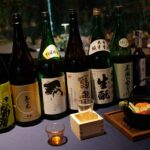
- The Aperitif: A Sake Primer You Can Use in Real Life
- The Wagyu Full-Course Meal: Different Cuts, Different Lessons
- Sake Pairings That Actually Match the Food
- Hands-On Moments and Cooking Participation (When the Night Allows)
- Menu Help and Take-Home Food Tips for the Rest of Your Tokyo Trip
- Price and Value: Is 148.65 Worth It?
- Practical Logistics: Seating Size, Dietary Requests, and How to Prepare
- Who Should Book This Shinjuku Wagyu and Sake Pairing?
- Should You Book Wagyu & Sake Pairing in Shinjuku?
- FAQ
- How long is the wagyu and sake experience in Shinjuku?
- What is included in the ticket price?
- Are drinks like beer included?
- How many people are in the group?
- Where do I meet for the tour?
- Can they accommodate food restrictions?
- What is the cancellation cutoff?
Key things to know before you go
- Course-by-course sake pairings: craft sake is matched to each wagyu dish, not dumped in a bowl at the start.
- Japanese menu decoding help: you get guidance on reading food and drink choices in Japanese.
- Multiple wagyu preparations: you taste different cuts and styles, from grilled to hotpot to udon.
- Original sake pairings and cocktails: some sake drinks are created specifically to work with the wagyu.
- Small group size: capped at 8 travelers, which makes questions and explanations actually possible.
A 6 pm Wagyu And Sake Meal Begins at Ushinobi Shinjuku
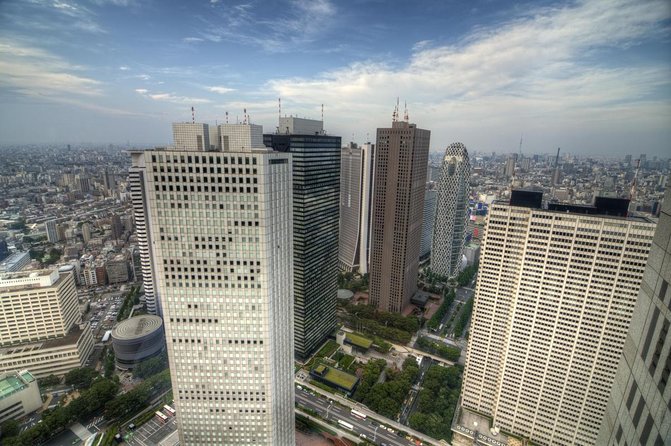
This experience starts at 6:00 pm at Ushinobi Shinjuku, inside the NSK Building (address provided by the tour). The timing matters. A late-afternoon stroll through Shinjuku is fun, but wagyu needs a focused dinner window—this gives you that clean transition from street to table.
Because it is near public transportation, you can keep your evening simple. You are not hunting across town for a reservation you barely understand. And with a mobile ticket, you should be able to check in without drama.
The tour is about 3 hours total. That is long enough to slow down and taste properly, but not so long that you feel stuck. For dinner, that balance is worth something.
You can also read our reviews of more tours and experiences in Tokyo.

The Aperitif: A Sake Primer You Can Use in Real Life
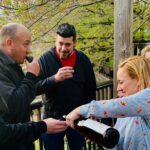
You walk into the restaurant and get a small aperitif made of unique Japanese drinks. The host then talks about sake and wagyu—what they are, where they come from, and how regional differences show up in flavor.
This part is more than trivia. When you understand what kind of sake you are drinking—aged, fermented styles, cloudy styles—you start to notice how texture changes: it can feel rounder, sharper, lighter, or more umami-forward. That makes the later pairings easier to appreciate because you are not guessing.
A practical perk here: the host also helps with understanding menus in Japanese. Even if you do not become fluent overnight, you can learn the key terms that steer you toward better choices. That is exactly the kind of help that turns a guided dinner into useful travel skill.
Reviews also point out how much guests learn about sake-making and how wagyu is graded. So expect the tone to be teach-and-eat, not just watch-and-cheer.
The Wagyu Full-Course Meal: Different Cuts, Different Lessons
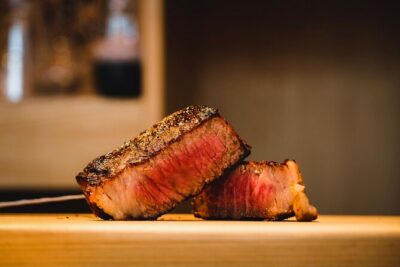
Then comes the main event: a wagyu full-course meal. The menu is designed to show you how much wagyu can change depending on cut and preparation. The experience sources wagyu from different regions in Japan, and you are served what the provider states are the best cuts available for your specific date.
You are not just eating steak. You are tasting variety.
A typical example menu includes:
- Two kinds of appetizers
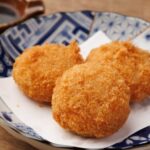
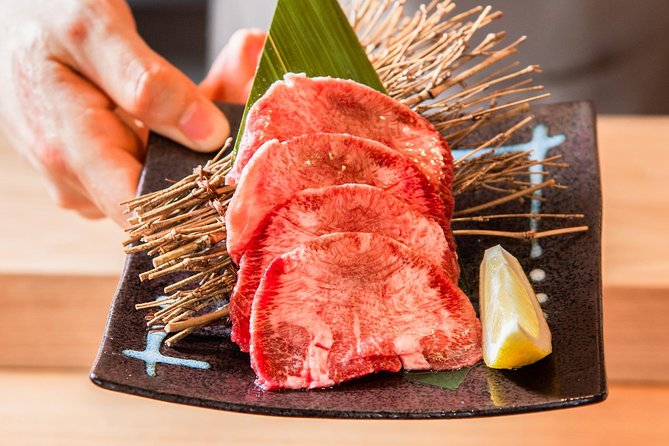
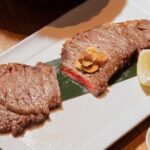
- Grilled wagyu beef tongue served with an original sake cocktail
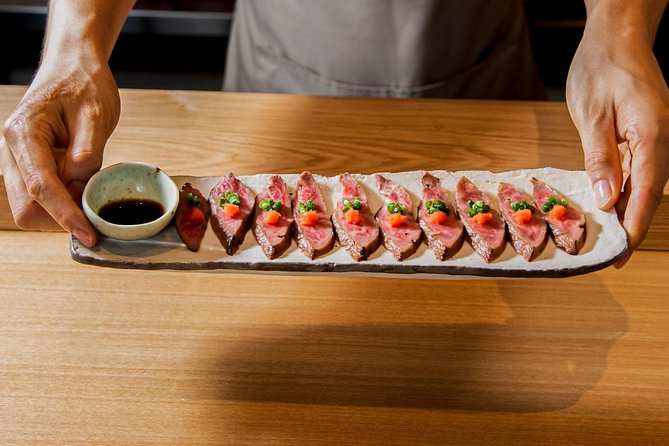
- Wagyu chuck flap tataki with warm sake
- Seasonal salad
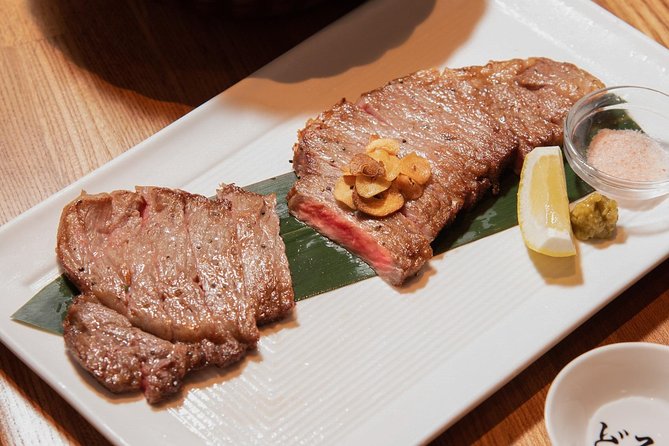
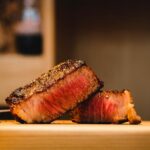
- Wagyu sirloin steak paired with nigori (cloudy) style sake
- Wagyu chuck hotpot paired with unpasteurized sake
- Wagyu dashi udon
- Dessert with sake and a surprise
What I like about this setup is that it teaches you with your mouth, not a slide deck. Tongue is its own world—rich, beefy, and tender in a way many first-timers do not expect. Tataki brings smoke and seared surface. Sirloin hits a more classic steak note. Hotpot and udon move you into comfort food territory, where sake pairing can shift how the whole bowl feels.
Also, several reviews mention the grading system of wagyu and how it connects to taste and texture. If you have ever wondered why people pay extra for certain labels, this kind of explanation makes the price make sense.
One more nice detail: the menu includes both traditional and more modern dishes. So you get the classic Japanese feel, but you are not locked into one style of preparation all night.
Sake Pairings That Actually Match the Food
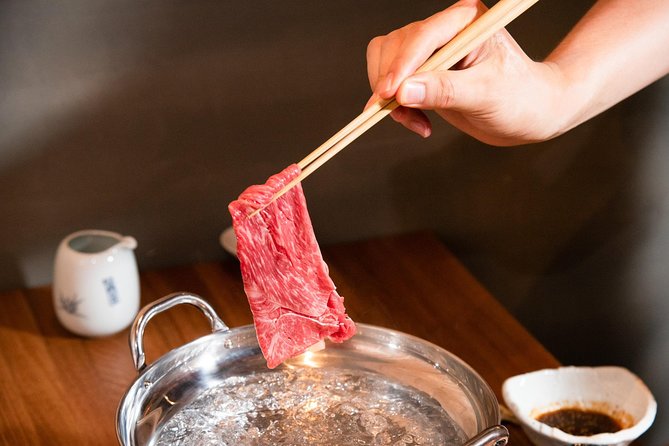
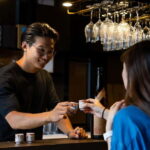
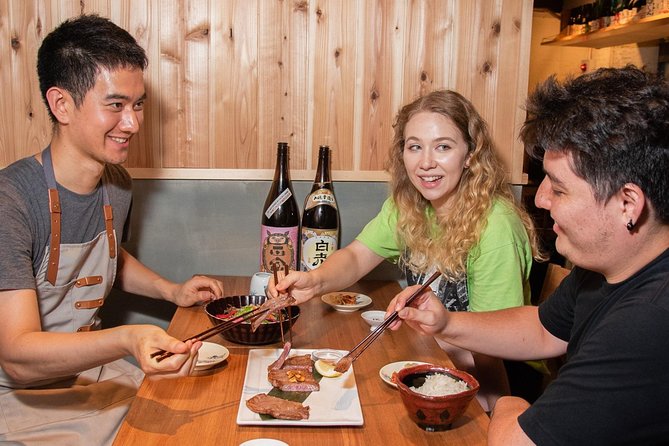
The best part for many people is the pairings are not random. For each wagyu dish, the team serves a different Japanese craft sake prepared in a different way. Some drinks are described as original cocktails designed specifically for the wagyu pairing.
This matters because wagyu fat and protein can swing flavor perception. A sharper sake might cut through richness. A softer or aged style might make the beef feel deeper and smoother. Cloudy sake (like nigori) can add sweetness or creamy texture that changes how steak fat feels on your palate.
In the example menu, you can see the logic:
- Warm sake with tataki
- Nigori with sirloin
- Unpasteurized sake with hotpot
And the sake is built into the meal rhythm. You are tasting one dish, then one matching drink, then another pairing. It keeps your senses organized. It also helps you remember what worked and why, which is exactly what you want if you are trying to shop for sake later.
A few reviews also highlight people trying aged and fermented styles for the first time. That is a big deal. If your sake knowledge starts at basically sweet vs. dry, this kind of variety gives you real context fast.
Hands-On Moments and Cooking Participation (When the Night Allows)
This experience is mostly a seated meal, but at least some versions include a hands-on element. One guest specifically mentioned getting to have a go at preparing and cooking the food, and that made the evening more fun and memorable.
You should not count on a full cooking class, since the format is described as a guided meal. But do expect that the host and chef may involve you at some point—especially if there are interactive steps in the hotpot or serving process.
Either way, the value here is that you leave with more than just a satisfied stomach. You learn how to recognize what you are eating and how to communicate it when you order on your own.
Menu Help and Take-Home Food Tips for the Rest of Your Tokyo Trip
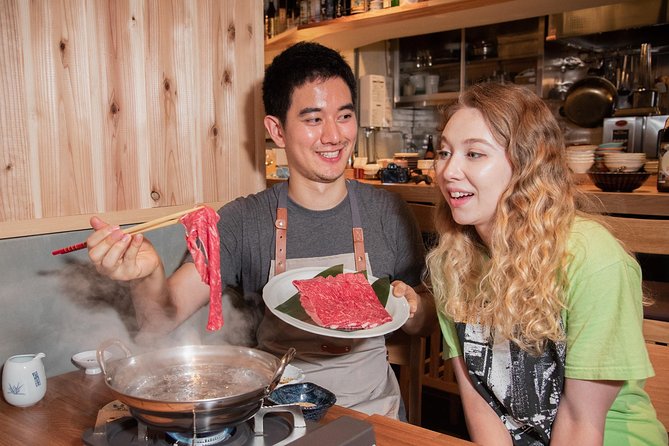
A lot of food tours stop at dinner. This one adds a useful extra: you get help deciphering menus in Japanese, plus you take away tailored foodie tips for the rest of your trip.
That is a big deal in Tokyo. Shinjuku is full of places that look amazing but can be hard to choose from if you do not know what you are ordering. When a host explains what to look for—how wagyu might be graded, how sake styles differ, what to pair with what—you are basically being handed a mini guide for your next meals.
You also get to eat more than you would if you were just dining with your own group. Think of this as buying extra meals and extra learning in one ticketed session.
And because the group is capped at 8 travelers, it is easier to ask questions. You are not shout-talking across a room.
Price and Value: Is 148.65 Worth It?
$148.65 per person is not cheap, but it can be good value when you understand what is included.
What you get included:
- A full course meal
- Multiple wagyu dishes (not one steak)
- Multiple sake pairings matched to each course
- Japanese menu help during the evening
What is not included:
- Additional drinks beyond the sake pairings (for example, beer)
So you are paying for the combination. If you tried to recreate this yourself, you would be paying for multiple separate dishes, multiple sake pours, and the help to know what to order. Even if you can read menus a bit, sake pairing is hard without guidance.
Also, the tour is about 3 hours. A meal like this is a full evening commitment. When the format reduces guesswork, it saves you time and mis-steps in a city where one wrong reservation can cost you a lot.
My practical take: if you want wagyu and sake together—especially if you are a first-timer—this is a reasonable way to spend your budget. If you already know your sake styles and you plan to seek wagyu on your own with a strong plan, you might skip. But for many first trips, this kind of structured tasting is exactly what you need.
Practical Logistics: Seating Size, Dietary Requests, and How to Prepare
Two practical things to get right.
First, the venue can feel small. One review notes the restaurant is very small and seating is tight with a group of around 6. That is not a deal-breaker, but it helps to know what you are walking into. If you hate close seating, you might prefer a larger restaurant experience instead.
Second, dietary needs need planning. The tour notes that vegan, vegetarian, and gluten-free options are limited, and you should message any food restrictions at least a week in advance. Last-minute requests may not be possible.
The good news: at least one review mentions the chef accommodated allergies. So if you have restrictions, do not wing it—send the details early, and be clear.
Also, come hungry. Multiple courses plus sake pairing can feel like a lot of momentum in a short time. One review explicitly says to bring your appetite because it is a lot of food.
Who Should Book This Shinjuku Wagyu and Sake Pairing?
This experience is a good fit if you:
- Want an easy entry into sake tasting without having to translate everything yourself
- Care about food structure—multiple courses, multiple pairings, and clear explanations
- Are visiting Tokyo for the first time and want help finding what to order next
- Like small groups and conversation at the table
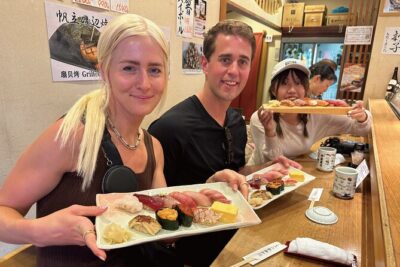
It is also a solid choice for couples and friends who want to share tasting variety. The shared meal format makes it feel social, even when you are learning.
It might be less ideal if you:
- Need broad vegan/vegetarian/gluten-free options (the tour says they are limited)
- Dislike tight seating in small rooms
- Only want one dish and one drink (this is a full-course experience)
Should You Book Wagyu & Sake Pairing in Shinjuku?
If you are craving the classic Tokyo pairing—wagyu plus sake—and you want to understand what you are tasting, I think you should book this. The price feels more fair when you consider the full-course menu, the variety of wagyu preparations, and the fact that sake pairings change with each dish.
Book it if you want more than just eating: you want menu-decoding help and practical tips you can use the rest of the trip. The small group size also makes the experience feel less like a conveyor belt and more like an evening with an expert at your table.
Skip it only if your diet needs are strict and you are not able to plan in advance, or if cramped seating would ruin your mood.
FAQ
How long is the wagyu and sake experience in Shinjuku?
It runs for about 3 hours.
What is included in the ticket price?
The ticket includes a full course meal with the sake pairings.
Are drinks like beer included?
No. The experience includes sake pairings, but additional drinks such as beer are not included.
How many people are in the group?
The group is capped at 8 travelers.
Where do I meet for the tour?
You meet at Ushinobi Shinjuku | Wagyu & SakeNSK Building, address given as 201, 1-chōme-22-1 Hyakuninchō, Shinjuku City, Tokyo 169-0073, Japan.
Can they accommodate food restrictions?
They ask you to message restrictions at least a week before. Vegan, vegetarian, and gluten-free options are limited, and last-minute requests may not be accommodated.
What is the cancellation cutoff?
You can cancel for a full refund up to 24 hours before the experience starts.
If you want, tell me your dietary needs and what kind of sake you usually like (dry vs. sweet). I’ll help you decide whether this pairing-style format is the right match for your trip.