REVIEW · TOKYO
Tsukiji Market Eating Tour, Authentic Sushi & Sake Comparison
Book on Viator →Operated by Rec Loc Experience · Bookable on Viator
Tokyo tastes different at Tsukiji. What makes this tour work is the small group pace and the chance to taste real market food while someone keeps you oriented. I especially like the sushi and sake comparison, because it turns a walk through seafood stalls into a focused tasting lesson you can actually use later.
You’ll also get a local guide who can answer questions clearly, which matters when the market gets loud and crowded. My only caution: there’s been at least one reported case of a last-minute cancellation where the meet-up didn’t happen as expected, so I recommend you keep an eye on any message updates the day of.
In This Review
- Key Things I’d Pack in Your Head Before You Go
- Why This Tsukiji Market Tour Feels Different From a Solo Stroll
- Where You Meet and How to Show Up Without Stress
- The Temple Detour That Explains the Neighborhood
- Tsukiji Jogai Market: Food, Tools, and the Stuff You Actually Want to Buy
- The Fish Market Shopping Center: Up Close With Seafood Culture
- Namiyoke Inari Shrine: A Quick Cultural Reset in a Market Corner
- The Real Point: Sushi Lunch That Actually Uses What You Learned
- Sake Drinking Comparison: How to Taste Like You Mean It
- Snack Menu Highlights: Small Bites, Big Palate Clues
- The Guide Makes the Difference (And Ariel Gets Named for a Reason)
- What You Get for the Price (And Why It’s Not Just a Cheap Food Walk)
- Timing and Pace: How to Dress and Plan Your Day
- Who This Tour Fits Best
- Should You Book This Tsukiji Market Eating Tour?
- FAQ
- FAQ
- Is the Tsukiji market tour in a small group?
- How long is the experience?
- What does the price include?
- Does the tour include a sushi lunch?
- What sake experience is included?
- What kinds of snacks are included?
- Are entrance tickets required for the stops?
- Where do I meet the group?
- Is hotel pick-up included?
- What is the cancellation policy?
- Do I need to bring a paper ticket?
Key Things I’d Pack in Your Head Before You Go
- Max 6 people means you can ask questions and still hear the guide
- Sushi lunch plus multiple snack stops turns sightseeing into a full food route
- Three sake types for comparison lets you notice differences instead of just drinking
- Temple and shrine quick stops give context to Tsukiji beyond seafood
- Kanji name sticker adds a fun, practical touch for ordering and chatting
- Mobile ticket keeps it simple once you’re at the meet-up area
Why This Tsukiji Market Tour Feels Different From a Solo Stroll
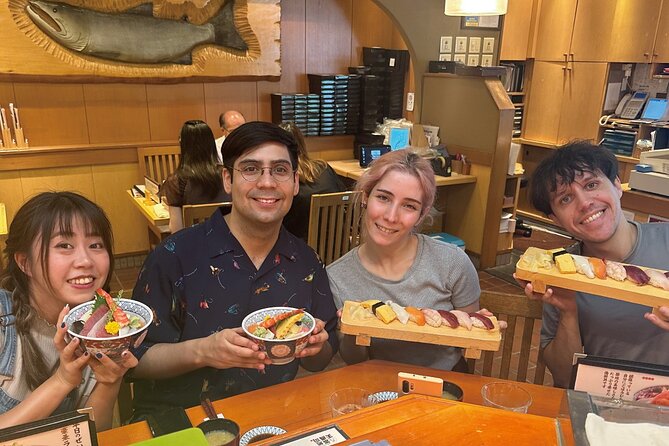
Tsukiji can be intense on your own. The streets and alleyways get packed, stall signs are everywhere, and it’s not always obvious what’s best for a first-timer. This tour helps you get your bearings fast and then get moving through the food parts without wasting time guessing.
The group size is the big deal. With a maximum of 6 people, the guide can slow down when you need translation, point out what to look for, and keep the line moving at a realistic speed. I like that you’re not herded through like a checklist.
You can also read our reviews of more tours and experiences in Tokyo.

Where You Meet and How to Show Up Without Stress
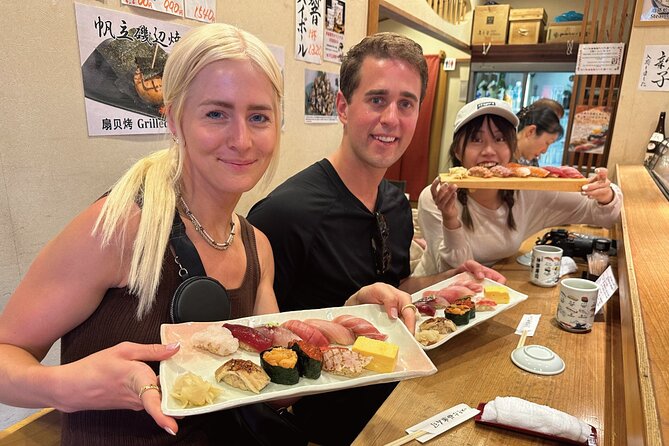
You meet at Tsukiji Station area, listed as Tsukiji Station 3 Chome-9 Tsukiji, Chuo City, Tokyo 104-0045. You’ll use a mobile ticket, so bring your phone with enough battery and signal.
Aim to arrive a few minutes early. Even with a great guide, Tsukiji is a place where people get turned around. If you’re early, you’ll be calmer if you have to find the exact spot.
The Temple Detour That Explains the Neighborhood
The first stop is Tsukiji Hongwanji Temple, known for its distinct atmosphere and architectural details. The exterior is designed to echo ancient Buddhist architecture from India and other parts of Asia. You also see stained glass at the entrance to the main hall and animal sculptures around the grounds.
Why this matters for a food tour: it reminds you Tsukiji isn’t just a shopping area. It’s a living neighborhood with traditions tied to the people who work here.
Plan for this as a short pause to reset your eyes before the market noise starts.
Tsukiji Jogai Market: Food, Tools, and the Stuff You Actually Want to Buy
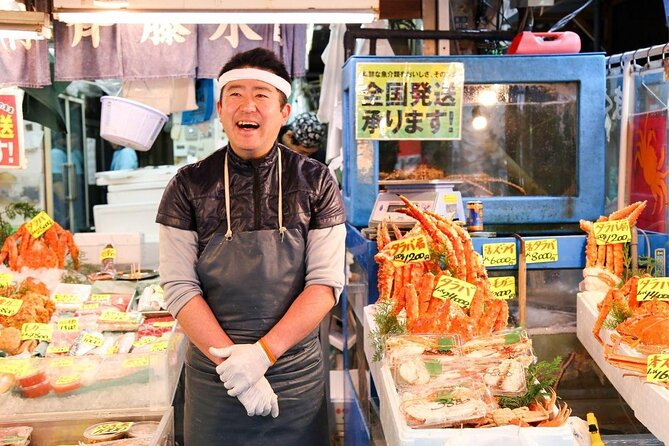
Next you’re in Tsukiji Jogai Market, described as the market’s core shopping strip, with 80 years of food culture history since its opening. The guide walks you through a dense row of more than 400 stores selling everything from fresh seafood to knives and cooking tools, plus sweets, soup stock, and sake.
This is also where the tastings and small food selections matter most. You get a distinctive menu that can include items like an egg omelet, strawberry daifuku, dashi, Japanese tea, and nuts. That mix is smart: it covers savory, sweet, and the flavor basics (like dashi) that you’ll notice later in sushi.
The guide tailors the route to your wishes. That’s a real advantage here, because Tsukiji can run in a few directions depending on what you care about most—seafood flavor, kitchen gear, or sweets.
The Fish Market Shopping Center: Up Close With Seafood Culture
After that, you head into the Tsukiji Fish Market area, described as a shopping center with specialty stores where buyers from culinary establishments come to pick up ingredients. This is your close-up look at the kinds of seafood you’ll only see in Japan, and how seriously professionals treat sourcing.
If timing lines up, you might even see a tuna dismantling show. Even if you don’t catch it, the area still gives you a sense of what the market produces and why chefs care about it.
One practical note: wear shoes you can stand in. This kind of tasting day is less about long sightseeing and more about constant movement, quick stops, and close-looking.



Namiyoke Inari Shrine: A Quick Cultural Reset in a Market Corner
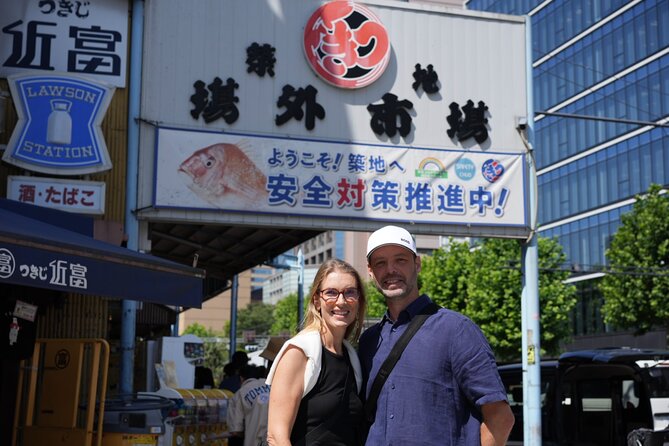
You finish the walking loop with a stop at Namiyoke Inari Shrine, located in a corner of the Tsukiji market area. Fishermen and market workers pray there for safety, which adds meaning to the day beyond food.
You can also see a unique lion statue. It’s the kind of detail a guide notices instantly, and it’s easy to miss if you’re walking without direction.
This stop is short, but it helps tie everything together: people, work, tradition, and the food that comes from that daily rhythm.
The Real Point: Sushi Lunch That Actually Uses What You Learned
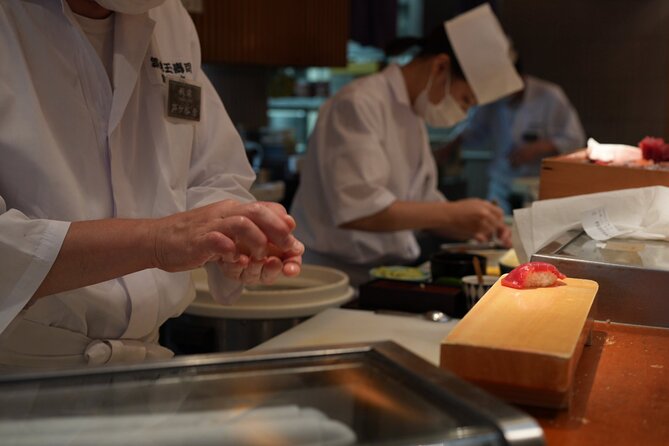
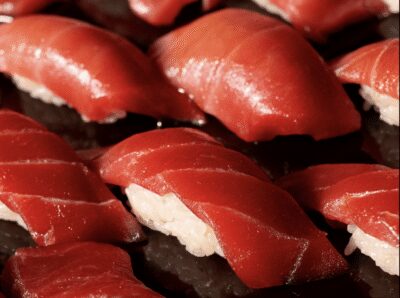
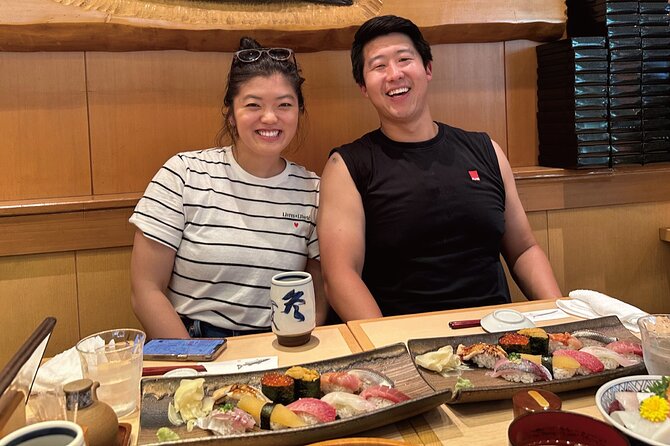
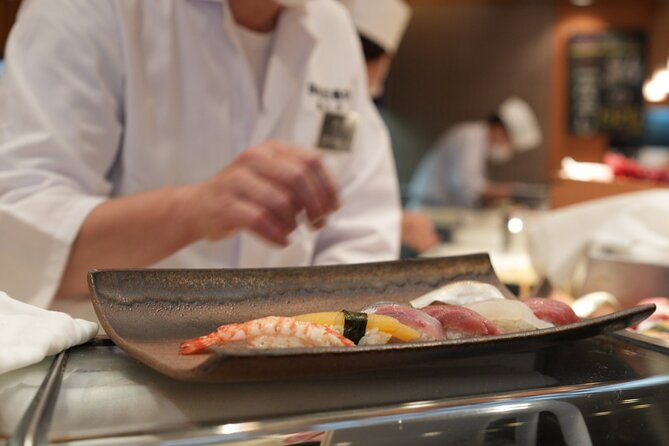
The tour concludes with a real sushi lunch at an authentic sushi restaurant. The lunch is described as high quality, using fresh seafood from Tsukiji, and the meal time is about 45 minutes.
This is where the tour earns its value. You’re not just eating random bites as you pass by stalls. You finish your walk with a proper sushi set so you can connect what you tasted earlier—like dashi flavors and market sweets—to what you’re eating in a classic format.
If you’re picky about food quality, this is also the part to pay attention to. Earlier tastings teach your palate what to look for, but the lunch is where you get a full sense of how the seafood turns into sushi.
Sake Drinking Comparison: How to Taste Like You Mean It
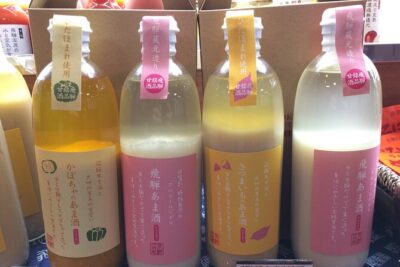
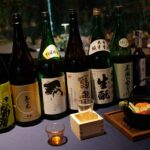
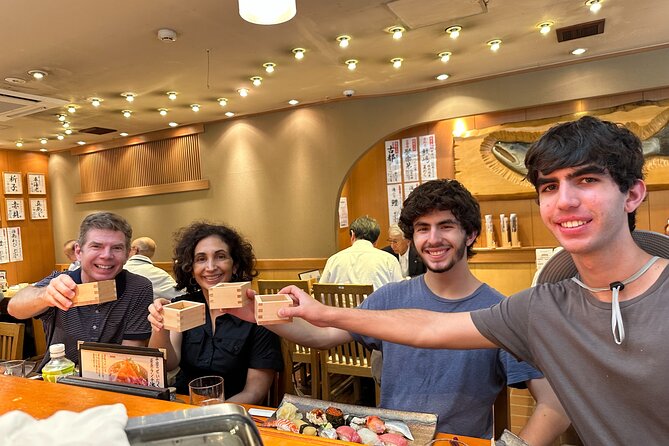
One of the standout parts is the sake component. If you choose the sake drinking comparison, you can compare multiple types of sake from several different brands.
I like this format because it reduces the usual problem: you drink, you like it, and then you can’t tell why. Comparison tasting pushes you to notice differences—how it smells, how it feels on your tongue, and how it pairs with the meal.
Even if sake isn’t your first love, a guided comparison usually helps you find what style you actually prefer, rather than relying on guesses at a store.
Snack Menu Highlights: Small Bites, Big Palate Clues
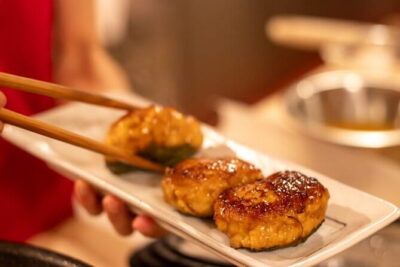
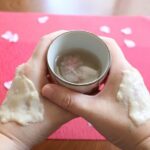
The snack menu includes a set of items such as egg omelet, strawberry daifuku, dashi, Japanese tea, and nuts. You can think of these as bite-sized lessons.
- Egg omelet helps with texture and savory balance.
- Daifuku gives you a sweet marker so you can compare later desserts.
- Dashi is a key flavor foundation for Japanese cooking, and it makes sushi taste more readable.
- Japanese tea is a palate reset, not just a drink.
And yes, there’s also been real joy around sweets. One family on a similar style of day called the mochi-like treat the best they’d had, which fits the way strawberry daifuku shows up here.
The Guide Makes the Difference (And Ariel Gets Named for a Reason)
A key factor in the experience is the guide’s delivery. Ariel is specifically mentioned as energetic and fun, and as someone who answers questions beyond just food—like helping with other parts of Tokyo.
That matters because Tsukiji is one of those places where it’s easy to get stuck in your own head. A good guide gives you permission to ask, and then makes sure you’re not just following instructions—you’re understanding what you’re seeing.
The tour is also designed so you can hear the guide in a small group. That turns the day from loud walking into an actual conversation.
What You Get for the Price (And Why It’s Not Just a Cheap Food Walk)
At $30 for about 3 hours, the value is built into what’s included: snacks, a real sushi lunch, an English local guide, and a Kanji name sticker. On top of that, there’s the alcohol option for a sake comparison.
A solo plan would cost you more in small pieces: you’d pay for each snack, then likely spend extra on a sushi meal anyway. Here, the tastings help set up your lunch, and the guide helps you spend time tasting instead of wandering.
The real question for you is how you want to spend your Tokyo time. If you’d rather learn what to try and then eat it, this is a practical use of a morning or afternoon window.
Timing and Pace: How to Dress and Plan Your Day
The tour lasts about 3 hours, with stop times ranging from quick temple/shrine visits to longer market segments. That structure works well if you want both culture and food without turning the day into a full travel marathon.
I’d plan this for a time when you’re comfortable standing and walking. You’ll be moving through market corridors and shopping areas, and you’ll need your feet to stay happy.
Dress for comfort. Bring a small bag for treats and keep your phone accessible since the ticket is mobile.
Who This Tour Fits Best
This tour is a great match if you:
- Want a guided route so you don’t lose time guessing what to eat
- Like structured tastings instead of random browsing
- Enjoy sushi and want a proper lunch, not just a single bite
- Appreciate quick cultural context through a temple and shrine
It may be less ideal if you:
- Want total freedom with no guidance
- Dislike alcohol and don’t want the sake option (you’d still get the non-alcohol snacks and lunch, but you won’t get the comparison)
Should You Book This Tsukiji Market Eating Tour?
If you’re visiting Tsukiji for the first time, I think booking makes sense. The tour gives you direction, tastings that build your palate, and an actual sushi lunch that ties the day together. The small group size also makes it feel less chaotic than going alone.
My one reason to pause is the rare report of an abrupt cancellation where the meet-up didn’t happen as planned. That’s not something you can predict from the tour itself. Still, it’s smart to check messages the day of and confirm you have the right meet-up details in hand.
If you want Tsukiji without the stress, this is a strong pick. You’ll leave fed, informed, and with a clearer idea of how Japanese flavors connect from dashi to sushi to sake.
FAQ
FAQ
Is the Tsukiji market tour in a small group?
Yes. The tour has a maximum of 6 travelers.
How long is the experience?
It runs for about 3 hours.
What does the price include?
Snacks and lunch are included, along with an English local guide. Alcoholic beverages may be included if you choose the sake drinking comparison.
Does the tour include a sushi lunch?
Yes. The tour concludes with a real sushi lunch at an authentic sushi restaurant.
What sake experience is included?
With the sake drinking comparison option, you can compare multiple types of sake from several sake brands.
What kinds of snacks are included?
The distinctive menu can include egg omelet, strawberry daifuku, dashi, Japanese tea, and nuts.
Are entrance tickets required for the stops?
The listed stops (temple and shrine areas) note free admission tickets.
Where do I meet the group?
The meeting point is listed as Tsukiji Station, 3 Chome-9 Tsukiji, Chuo City, Tokyo 104-0045, Japan.
Is hotel pick-up included?
No, private transportation and hotel pick-up are not included.
What is the cancellation policy?
You can cancel for a full refund if you cancel at least 24 hours before the experience starts.
Do I need to bring a paper ticket?
No. You’ll receive a mobile ticket.