REVIEW · TOKYO
Tokyo: Sushi Cooking Class with Sake Tasting
Book on GetYourGuide →Operated by MagicalTrip · Bookable on GetYourGuide
Knife skills start in a real Tokyo supermarket. This Tokyo sushi cooking class pairs hands-on Japanese home cooking with a sake tasting you’ll actually taste alongside what you made, not after the fact.
I love two things most: first, the local supermarket start, where your guide helps you pick ingredients you can’t easily judge at home. I also love that you don’t just roll sushi. You practice core basics like sushi rice seasoning and dashi, then make dishes such as miso soup, eggplant dengaku, and dashimaki tamago (rolled egg). In past classes, instructors like Tiger, Suzy, Mahori, and Fuji have been praised for clear steps and patient help, especially when people are nervous with knives.
One thing to consider: the tour includes spots that aren’t ideal for wheelchairs or strollers, and you need to be on time. If you’re late and miss the group start, you can’t join late for a refund or reschedule. Also, allergy-free cooking can’t be guaranteed since the kitchens used aren’t run by the tour provider.
In This Review
- Key highlights to pay attention to
- What this Tokyo sushi-and-sake class really is
- First stop: the supermarket mission in Iriya
- Knife skills and sushi rice: the foundation you’ll actually use
- The menu you’ll cook: more than sushi rolls
- The sake tasting: the part worth slowing down
- Lunch, photos, and the “take it home” payoff
- Asakusa and Kappabashi time after the meal
- Kids playroom: how this works for families
- Vegan and vegetarian options: what’s supported (and what isn’t guaranteed)
- Group size and the instructor style that makes it work
- Value check: is $112 a good deal for Tokyo?
- Finding the meeting point without stress
- Season note: Tokyo heat is real
- Should you book this sushi cooking class in Tokyo?
- FAQ
- How long is the sushi cooking class?
- Is sake tasting included?
- Where do we meet for the tour?
- Is the tour in English and is it a small group?
- Can kids join, and is there child support?
- Are vegan or vegetarian options available?
- Is it allergy-friendly?
Key highlights to pay attention to
- A market run that teaches you what to buy (and why) before you cook
- Knife basics and sushi rice technique, not just final plate assembly
- Hands-on Japanese dishes beyond sushi, including dashi-based miso soup and dashimaki tamago
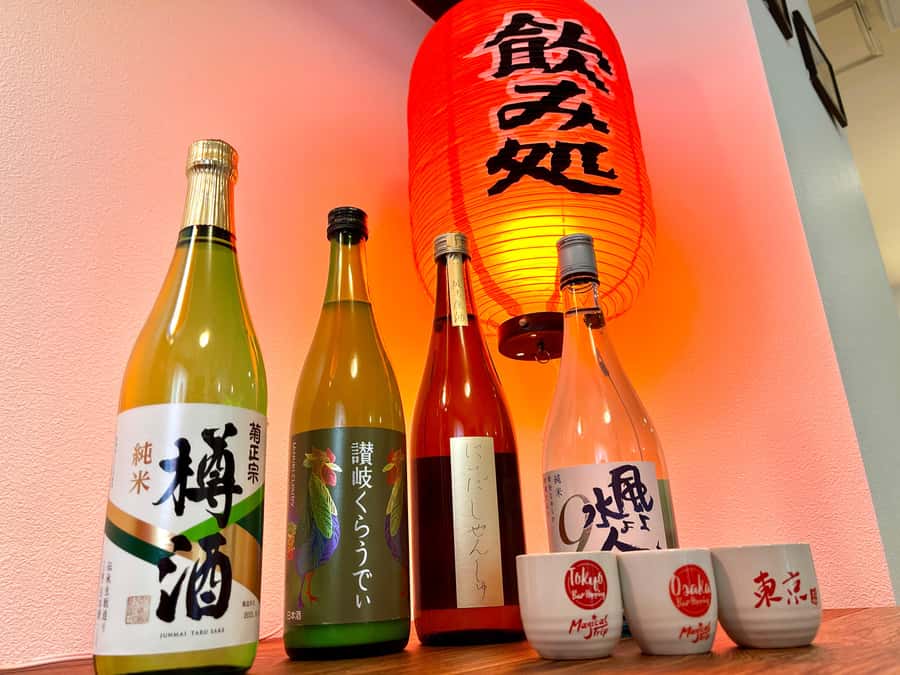
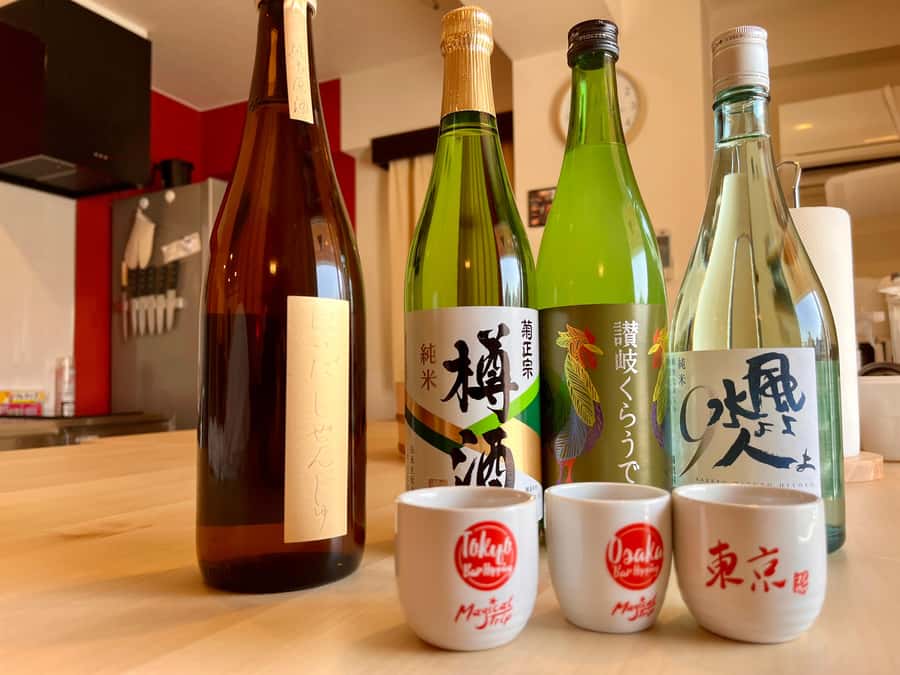
- Sake tasting with 4 varieties, paired with what you cook
- Small group (up to 7) so you get real attention at the cutting board
- Kids can join, with a kids playroom for downtime during cooking
What this Tokyo sushi-and-sake class really is
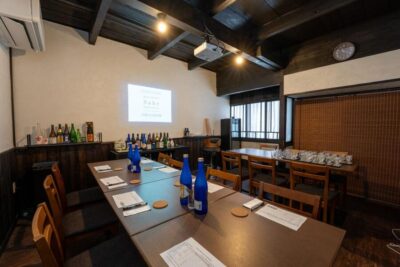
This is a short-course cooking experience built around Japanese home style food. You start by shopping like a local—then you move into a professional kitchen studio to cook, eat lunch, and taste sake.
The big idea is simple: if you understand ingredients and the steps behind flavor, sushi stops feeling like a mystery. And because you taste your own food, the class feels less like watching and more like learning with your hands.
You can also read our reviews of more tours and experiences in Tokyo.

First stop: the supermarket mission in Iriya
You’ll meet at FamilyMart near Gindako in Iriya Station, Exit 2. There are two FamilyMarts in the station area, so aim for the one next to the Gindako takoyaki shop and Doutor Coffee shop.
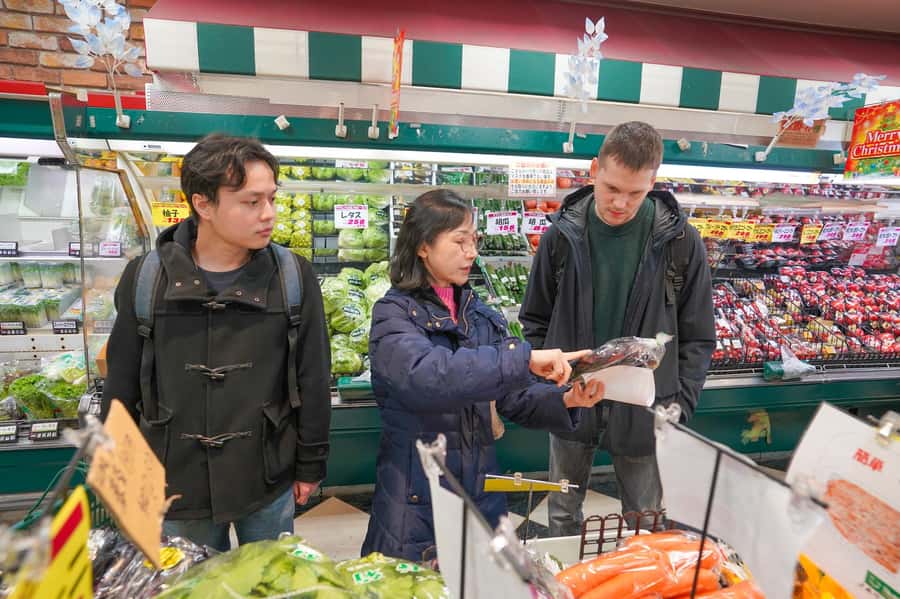
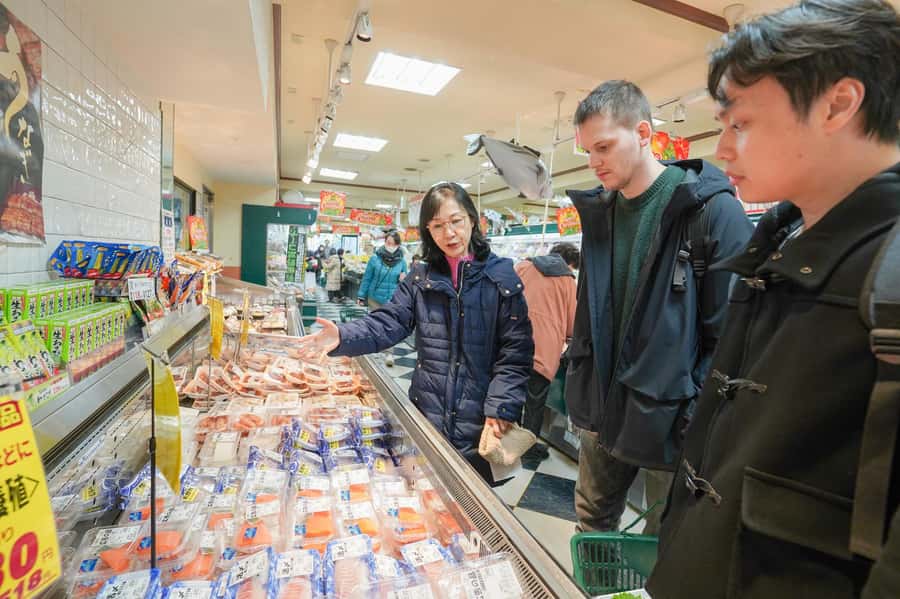
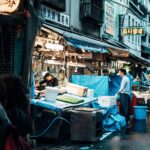
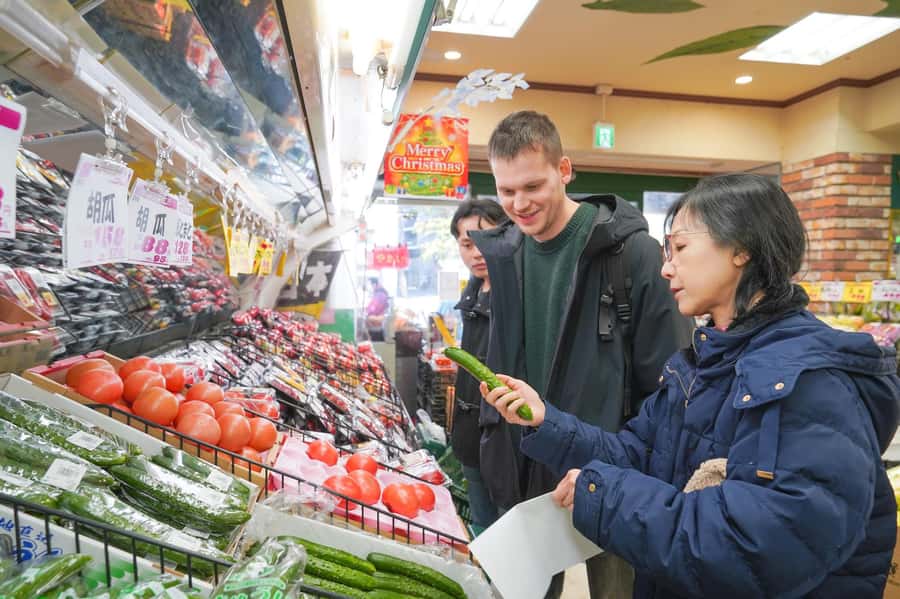
From there, the shopping walk is part teaching moment, part scavenger hunt. Your guide helps you pick items like fish, vegetables, and the seasonings that show up in Japanese cooking. This matters because sushi at home is mostly about texture and balance—rice seasoning, freshness, and the right ingredients do the heavy lifting.
I like that this isn’t a “photo and move on” market stop. The goal is to help you spot what’s worth using right now, and to understand what each ingredient role is. When you get back to your own kitchen, those small choices become your secret sauce.
Knife skills and sushi rice: the foundation you’ll actually use
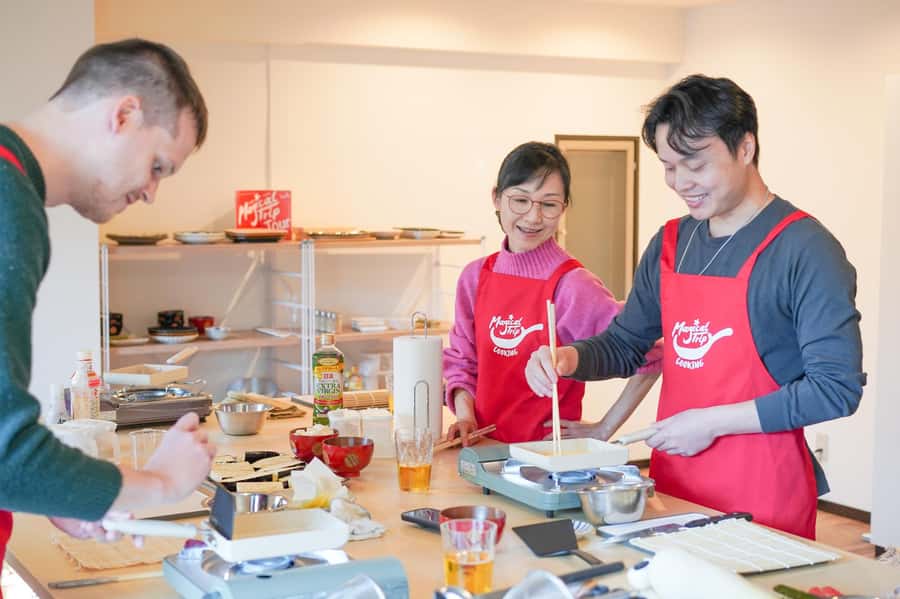
Once you’re in the kitchen studio (in the Asakusa and Kappabashi shopping district), the class moves into technique. Everyone starts with basics, including how to hold a kitchen knife properly. If you’ve never used one in a careful way, you’ll get a calm start, not a stress test.
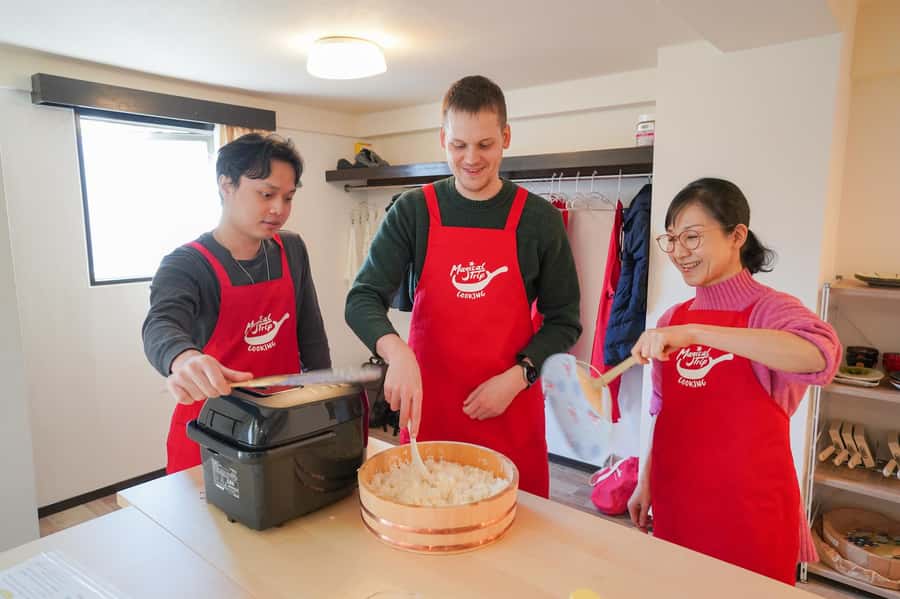
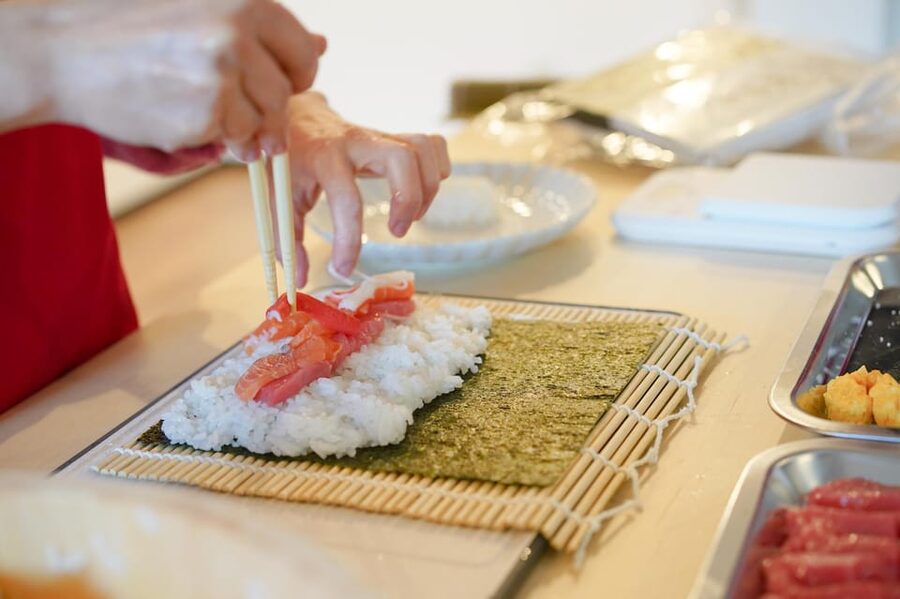
The heart of sushi work is the rice. You’ll learn how to make sushi rice with vinegar seasoning—this is where most home sushi attempts go off track. Once your rice is right, rolling gets easier and the final bite tastes like it belongs in Japan.
You also build the flavor base for other dishes. You’ll prepare dashi for miso soup, which teaches you how Japanese soups get their depth. Even if you never make sushi again, learning dashi makes Japanese home cooking much more approachable.
The menu you’ll cook: more than sushi rolls
This class is designed so you’re not stuck doing one task for four hours. You’ll work on multiple dishes, which keeps you engaged and helps you understand how Japanese flavors connect.
Here’s what’s included in the cooking portion:
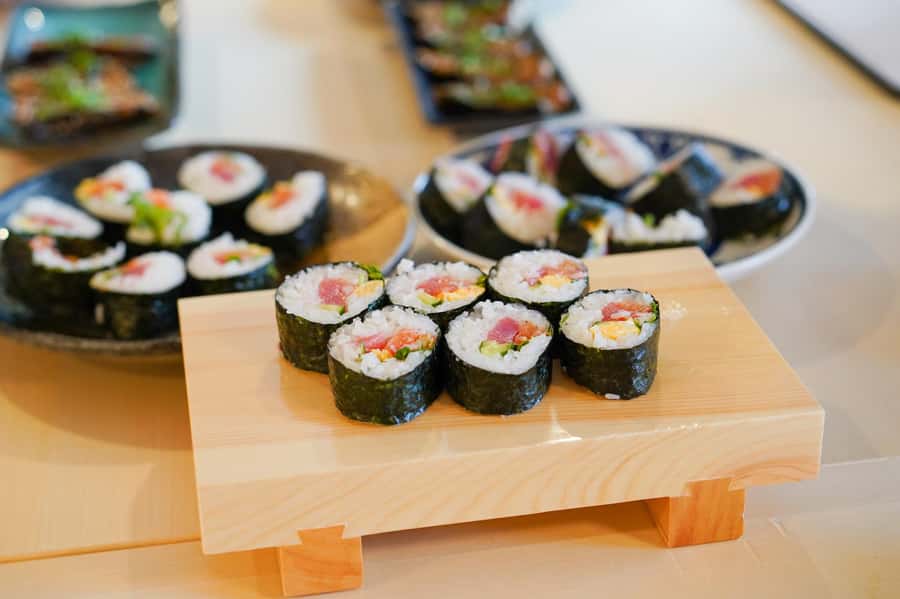
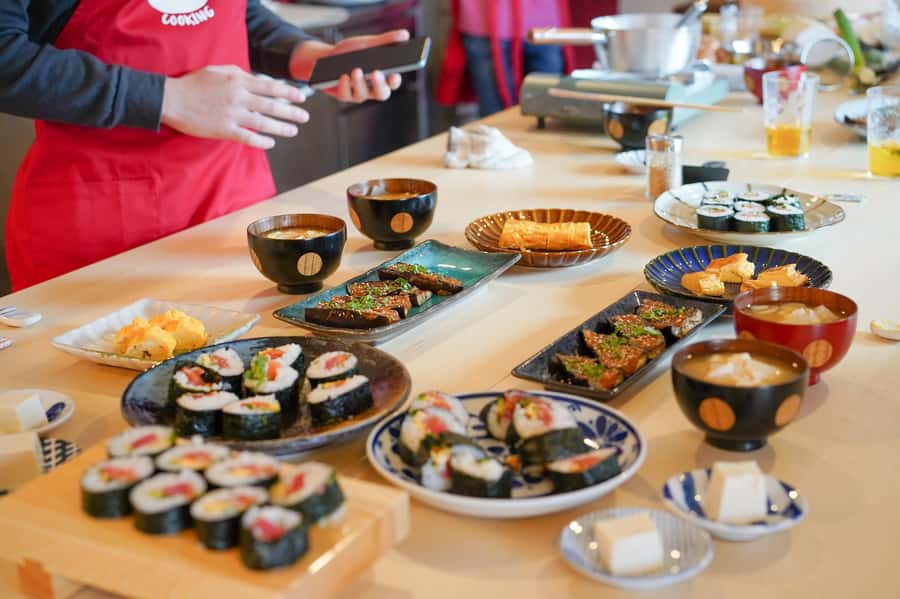
- Sushi rolls, using the sushi rice you made
- Miso soup, built with dashi
- Eggplant dengaku, a sweet-savory style eggplant dish
- Dashimaki tamago, the rolled egg (Japanese rolled omelet)
Eggplant dengaku is a great “wait, eggplant can be this good?” moment. And dashimaki tamago is perfect for learning process—layer by layer, it turns into something that feels way more advanced than it is when you follow steps.
I also appreciate that the class is welcoming for beginners and aspiring cooks alike. The pacing is structured so you learn the “why” behind each stage, not just the “do this, then that.”
The sake tasting: the part worth slowing down
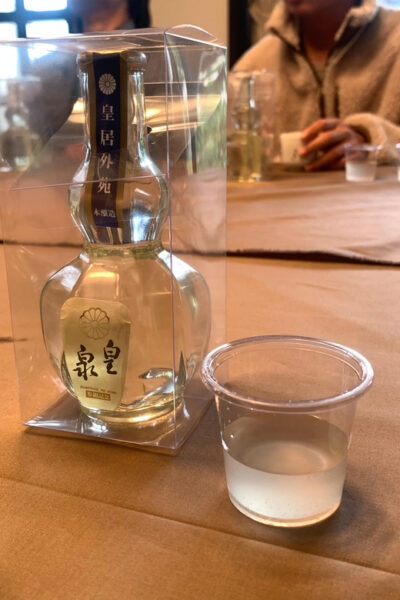
Yes, sake tasting is included—and it’s not treated like a side snack. You’ll choose from four premium sake varieties. Then you get a chance to enjoy them as pairings with sushi and the traditional dishes you cooked.
This is the best moment to pay attention to small differences. Even without fancy tasting vocabulary, you’ll start to notice how sake changes the feel of rice, fish, egg, and soup. It’s also a nice cultural layer, because in Japan food and drink are often treated as a matched system.
A practical tip: pace yourself. You’ll be eating and cooking, and sake is alcohol, even if the tasting portion is meant for sampling.
Lunch, photos, and the “take it home” payoff
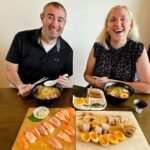
After cooking, you eat your creations as lunch. You’re not just tasting samples—you’re getting a real meal based on what you prepared.
You’ll also receive photos from the tour. That’s handy if you want a record of your roll shapes and the dishes you made without balancing your phone over hot surfaces.
The best part for long-term value: you receive recipes to help you recreate what you learned back home. This turns the class into a skill, not just a one-time experience.
Asakusa and Kappabashi time after the meal
After lunch, you’re invited to explore Asakusa, one of Tokyo’s well-known sightseeing areas. You’ll also be in the Asakusa and Kappabashi area around the studio, which is famous for restaurant supplies—so it’s an ideal zone to look for Japanese kitchen items.
This is a great add-on if you like combining food learning with a neighborhood walk. You’ll leave with both kitchen know-how and a better sense of where that kitchen culture comes from.
Kids playroom: how this works for families
This tour is open to all ages, and there’s a kids playroom so younger participants have somewhere to hang out while adults cook and taste. It’s a thoughtful detail if you’re traveling with kids who can’t sit quietly for a long classroom session.
Keep in mind that not every stop is stroller-friendly. The tour notes that some locations included aren’t accessible by wheelchair or stroller, so plan accordingly if that affects your family.
Vegan and vegetarian options: what’s supported (and what isn’t guaranteed)
Vegan and vegetarian guests are welcome. The tour states that ingredients and the cooking process can be arranged.
That said, the tour also notes you can’t count on allergy-free cooking. Food is prepared in kitchens not belonging to the tour provider, so they can’t guarantee no cross-contact. Substitutions might not always be possible at every stop, though the team will make efforts to compensate at other points.
If you have allergies, treat this as a “must confirm directly” situation before you book.
Group size and the instructor style that makes it work
The class is limited to 7 participants, which is a big deal. Sushi rolling and knife work are hands-on skills, and you want time for questions. A small group setup makes it easier for your guide to check your grip, adjust your rice amount, and explain steps clearly.
Also, the guide is English-speaking. That sounds basic, but in a cooking class it’s the difference between following instructions and actually understanding them.
In past sessions, guides such as Takahito and Mihori have been highlighted for patience and step-by-step guidance. Other instructors like Sho and Taka have been praised for making the market stop and cooking parts feel easy to follow.
Value check: is $112 a good deal for Tokyo?
At $112 per person for a 4-hour small group, you’re paying for more than a class. You’re also covering ingredients, lunch, tea, sake tasting (4 varieties), and photos. Plus, you get guided shopping in a real Tokyo supermarket, which is usually where self-guided attempts struggle.
If you’ve ever tried to learn sushi from YouTube alone, you know the missing piece is feedback. A skilled guide corrects the stuff that keeps you from getting results—rice seasoning balance, technique, and timing.
Where the price might feel less attractive: if your main goal is simply to eat great sushi and you’re already confident cooking at home. In that case, you might prefer a meal-focused option. But if you want skills you can repeat, the price starts to look fair fast.
Finding the meeting point without stress
Meet in front of FamilyMart next to Gindako shop in Iriya Station Exit 2. Again: there are two FamilyMarts, so choose the one near Gindako takoyaki and Doutor Coffee shop.
From a practical standpoint, I’d arrive early enough to double-check you’re at the right FamilyMart. The tour explicitly asks that you start on time and notes that if you miss the group you won’t be able to join late for a refund or reschedule.
Season note: Tokyo heat is real
In summer, Tokyo can be very hot and humid. The tour advises you to bring water and wear a hat to help prevent heat stroke. This matters because you’ll be out walking at least during the supermarket portion.
If you’re visiting in warmer months, plan for hydration first, sightseeing second.
Should you book this sushi cooking class in Tokyo?
I think you should book it if you want hands-on learning, not just a food stop. The combination of supermarket shopping, sushi fundamentals, and sake tasting with 4 varieties gives you a full Tokyo food story in a compact 4 hours.
You might skip it if:
- you already cook sushi confidently and want more time eating rather than practicing
- you need guaranteed allergy-free preparation (the tour can’t promise that)
- mobility with stairs or uneven shop areas could be a problem
If you fit the “I want to learn and I’m ready to cook” profile, this is a strong value choice. And when you leave with recipes, you’re not ending the day with a memory—you’re ending it with a new set of skills.
FAQ
How long is the sushi cooking class?
The experience lasts about 4 hours.
Is sake tasting included?
Yes. Sake tasting is included with four sake varieties, and you can choose your favorite.
Where do we meet for the tour?
Meet in front of FamilyMart next to the Gindako shop at Iriya Station Exit 2. There are two FamilyMarts there, so pick the one next to Gindako takoyaki and Doutor Coffee shop.
Is the tour in English and is it a small group?
Yes. The live tour guide speaks English, and the group is limited to 7 participants.
Can kids join, and is there child support?
All ages can join, and the tour includes a kids playroom for your little ones.
Are vegan or vegetarian options available?
Yes. Vegan and vegetarian guests are welcome, and the team arranges ingredients and the cooking process.
Is it allergy-friendly?
Allergy-free cooking cannot be guaranteed since the food is prepared in kitchens that don’t belong to MagicalTrip, and substitutions may not always be possible at every stop.