REVIEW · TOKYO
Ginza, Tokyo: Sake Experience with traditional vessels
Book on GetYourGuide →Operated by Y COMPANY, LIMITED LIABILITY COMPANY · Bookable on GetYourGuide
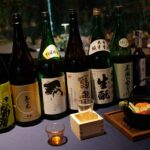
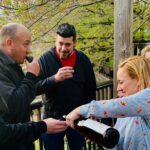
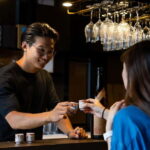
Tokyo Bay and sake in the same breath. This Ginza tasting turns a casual sip into a hands-on lesson about flavor, history, and the vessels that change everything. You get three starter-friendly types of sake paired with the kind of glassware and ceramics you usually only see in Japanese table culture, and you’ll hear the story in English from a bilingual staff.
I especially like two things: first, how the tasting is designed for beginners, so you’re not lost in technical terms while you’re still learning what you like. Second, the experience ties together sake making, regional culture, and the idea that serving vessels matter, including a KINTSUGI-style presentation using 400-year-old Imari porcelain.
One potential drawback: this is a bar-style sit-down tasting, and there are specific health or comfort situations where it may not be a good fit (for example, claustrophobia or heart/respiratory conditions), so check your comfort level before you book.
In This Review
- Key things I’d circle on your plan
- Ginza + Tokyo Bay: the setting that makes sake feel like part of Tokyo
- Your first sake lesson: three styles, guided in plain language
- The vessel matters: wine glasses vs KINTSUGI with 400-year-old Imari
- What the hosts do differently (and why names like Hiyori, Nana, and Rireka pop up)
- The pacing: how to enjoy three sakes without turning it into a blur
- Price and value: $22 for a cultural tasting, not an all-you-can-sip
- Who should book this Ginza sake tasting (and who should skip it)
- How to plan around it in your Tokyo evening
- Should you book this Ginza sake experience?
- FAQ
- Where is the meeting point?
- How long is the sake experience?
- How much does it cost?
- What’s included in the tasting?
- Is the tour offered in English?
- How big is the group?
- Is it wheelchair accessible?
- What are the cancellation terms?
Key things I’d circle on your plan
- Tokyo Bay view from a Ginza high-floor bar setting, which makes even the first sip feel special
- Three sake tastings chosen for a first-time experience, not a random grab bag
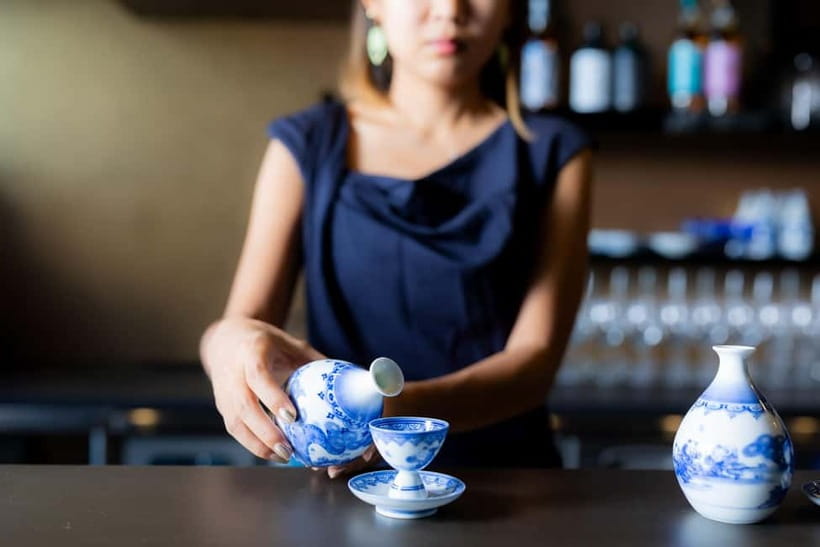
- Vessel-focused tasting, including wine glasses and KINTSUGI-linked Imari porcelain
- Bilingual English guidance on sake culture and how different breweries/regions shape flavor
- Small group (max 7), so you can ask questions and get real answers
- Travel tips from the staff after you finish, useful if you want a smooth next step in Tokyo
Ginza + Tokyo Bay: the setting that makes sake feel like part of Tokyo
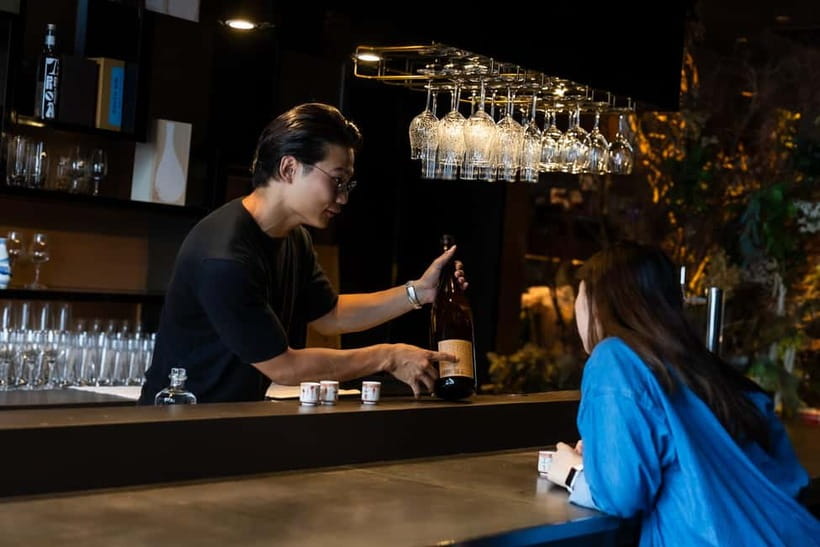
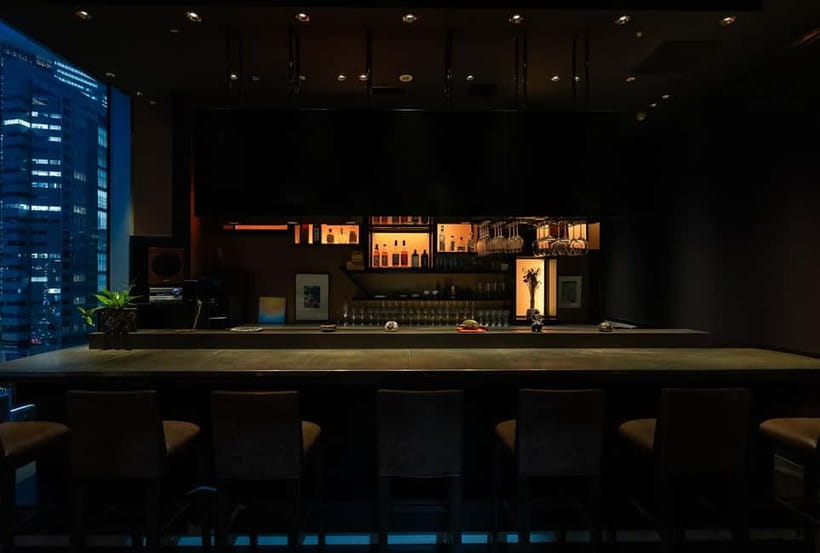
Ginza is polished and easy to navigate, and that matters because you’re going to a specific meeting point, then settling in for about a one-day block. The location puts you in the middle of Tokyo’s “go big” mood, but you’re not just staring at expensive storefronts. You’re up high, looking toward Tokyo Bay, while you taste sake.
That view does two practical things. It gives you a calm, scenic backdrop so you can focus on flavor. It also changes the pace: instead of rushing through a checklist of neighborhoods, you slow down and let the tasting be the reason you’re there.
And because the experience is in a modern building with clear wayfinding (Swarovski on the first floor, then the 11th), you’re not spending your evening decoding directions. You’re getting to the point: sipping, learning, and walking away with a sense of what you actually enjoy.
You can also read our reviews of more tours and experiences in Tokyo.
Your first sake lesson: three styles, guided in plain language
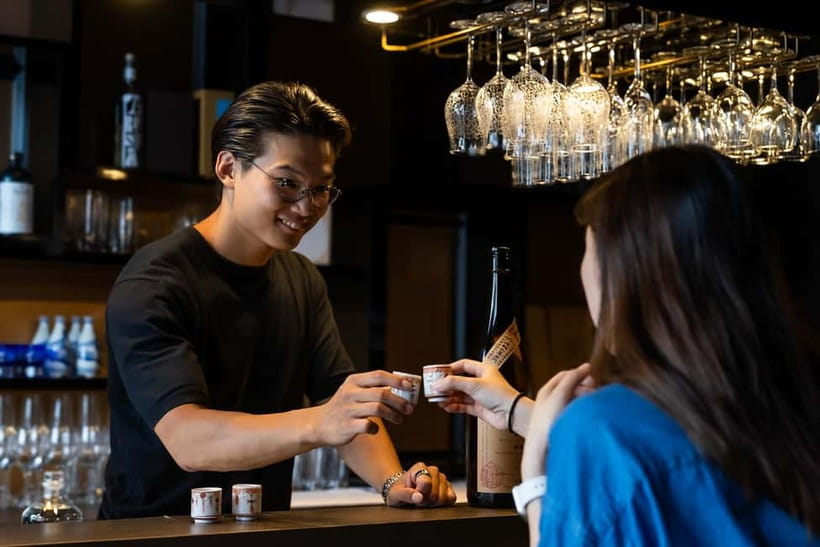
The tasting experience is built around a simple idea: if it’s your first time with Japanese sake, the fastest way to understand it is through comparison. You try three types of sake, and each one comes with context on what makes it distinct—plus guidance on what to notice as you taste.
The bilingual staff explain the basics and the cultural side, so you’re not stuck translating in your head. They also frame sake within Japan’s regional identity. Japan has about 1,500 sake breweries, and the takeaway is clear: sake isn’t one flavor. It’s a family of styles shaped by where it’s made and how it’s brewed.
You’ll also get travel guidance from the staff. That may sound small, but it’s a big value-add when you’re in Tokyo and want your next move to make sense. I find it helps to ask for one or two recommendations tied to your interests right after you finish—because your brain is still in “learning mode,” and you’re more likely to remember what to do next.
The vessel matters: wine glasses vs KINTSUGI with 400-year-old Imari
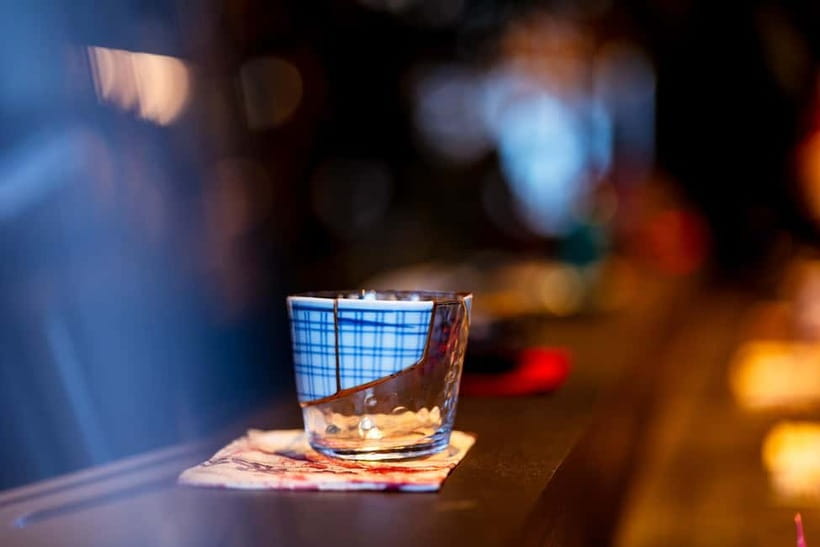
This is the part that makes the experience feel more than a tasting flight. You aren’t just sampling; you’re learning why certain vessels work better with certain sake profiles.
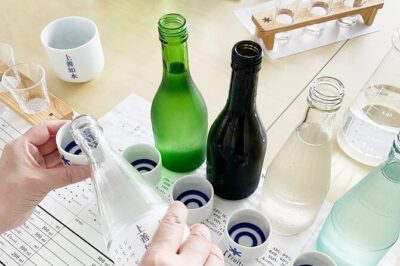
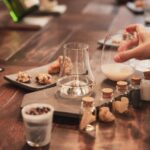
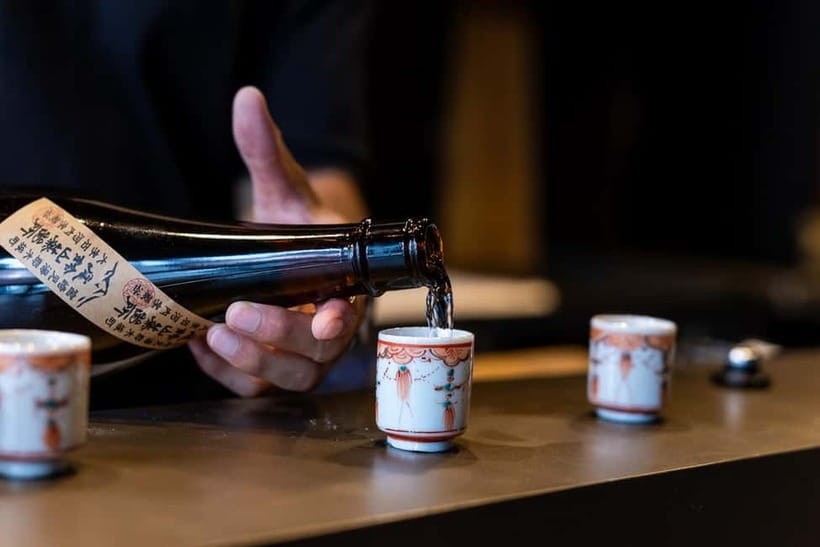
Some pours are served in wine glasses. That’s a useful detail because wine glass shapes are designed to influence aroma and how liquid hits your palate. In practice, it means you can pick up different notes more easily, even if you don’t have formal tasting vocabulary.
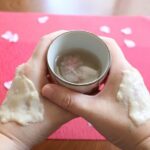
Then there’s the showpiece: KINTSUGI paired with 400-year-old Imari porcelain. Kintsugi is a repair and finish tradition where broken ceramic isn’t hidden; it’s highlighted. In this setting, that idea becomes part of the tasting experience. The staff connect the vessel to how you experience the sake, so you’re paying attention to presentation, not just alcohol.
Why should you care? Because it trains your senses. After a tasting like this, you start seeing tableware and service choices as part of flavor—not decoration. Back in your own Tokyo itinerary, you’ll be more confident ordering sake, too. You’ll know to ask for the right serving style instead of accepting whatever comes by default.
What the hosts do differently (and why names like Hiyori, Nana, and Rireka pop up)
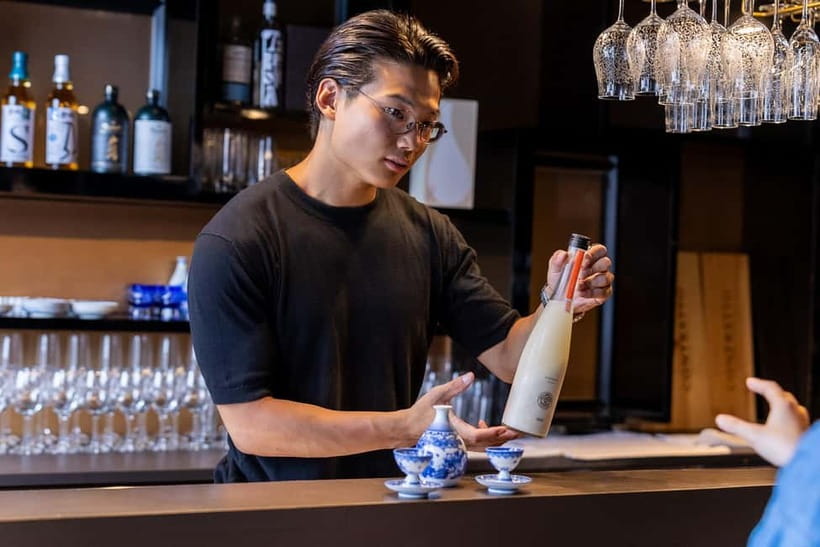
When the staff can explain things in a way that feels human, the entire experience clicks. The hosts here are part of the value, not just the background service.
You’ll be guided by English-capable instructors/staff, and they bring structure to the tasting: what you’re trying, how to taste it, and what cultural angle to connect it to. In particular, names like Hiyori and Nana show up as standout hosts in customer notes, and Rireka is described as especially helpful and friendly.
That matters because sake can go “technical” fast if you let it. Here, the staff focus on making the learning usable. Instead of making you memorize categories, they guide you to notice changes between pours and understand the logic behind why those vessels were selected.
If you want to make the most of your hour-ish at the bar (and you will), come in with one simple mindset: ask questions early. When you’re still curious, your hosts can adjust how they explain. And since the group is small, you’re not stuck waiting your turn while others take the attention.
The pacing: how to enjoy three sakes without turning it into a blur
You’re tasting three types of sake and nothing else is included—no extra drinks or snacks. That’s a good thing if you treat it like a structured intro. You’ll stay in control because your drink lineup is predetermined, and you can focus on differences between styles rather than chasing variety.
A practical way to enjoy it:
- Take your first pour slow, and let the aroma reach you before you sip.
- Between tastings, pause long enough to reset your palate.
- If you’re curious, ask what the staff think you’re noticing at that moment.
Because you’re at a bar with a view, you’ll likely have some time to settle in after you meet. Use that time to look out over Tokyo Bay for a minute, then back to your glass. It’s a weirdly effective way to stay present and not rush through the tasting.
Also, expect the experience to include explanation, not just silent sipping. That means your pace is guided, which is helpful if you’re not a “drink and figure it out” kind of person.

Price and value: $22 for a cultural tasting, not an all-you-can-sip
At $22 per person for a one-day experience, the price feels fair once you look at what you’re actually getting. You receive:
- Three sake tastings
- Bilingual staff to share history and culture
- Specific serving vessels, including wine glasses and KINTSUGI with 400-year-old Imari porcelain
- A small group limit of 7 participants
What’s not included is important: no additional glasses and no snacks. That can be a drawback if you’re expecting a full evening of food-and-drink. But it also keeps the experience focused and limits upsells.
So the real value is the combination: three samples plus the “why” behind them. If you want sake just for alcohol, you can find cheaper bars. If you want a guided cultural snapshot—with the extra vessel element—this is the kind of price where you feel like you paid for explanation, not just pours.
Who should book this Ginza sake tasting (and who should skip it)
This experience is described as wheelchair accessible and offered in English. You’ll also be part of a small group (limited to 7), which usually means you get more attention than you would in a bigger tour setting.
That said, it’s not suitable for a wide list of conditions and situations, including:
- Pregnancy
- Claustrophobia
- Heart problems
- Vertigo
- People with respiratory issues
- Epilepsy
- People with diabetes
- People with a cold
- People with haemophilia
- People with pre-existing medical conditions
- People with high blood pressure
- People with recent surgeries
- Children under 18 (and also children under 33 lbs / 15 kg)
- People with lactose intolerance
I’m not listing those to scare you off. I’m listing them because the experience has an environment and setup that may be sensitive for some people. If you’re on the edge with any of those, confirm with the provider before you go.
Best fit:
- You’re a first-time sake drinker who wants a structured intro
- You like culture that shows up in real details (like vessel choice)
- You want a relaxing stop in Ginza that isn’t a long walking day
- You enjoy asking questions and getting recommendations for the rest of Tokyo
How to plan around it in your Tokyo evening
This is in Ginza, so you can pair it with other nearby plans. The meeting point is clear: come up to the 11th floor of the JEWEL BOX GINZA building, where Swarovski is on the 1st floor.
That’s the kind of detail that saves time and stress. In Tokyo, losing ten minutes finding the right entrance can mess up the rest of your night. Here, if you show up and orient yourself on the building floor, you should be in good shape.
Timing-wise, it’s described as a one-day valid experience with starting times depending on availability. I recommend checking the schedule so you can catch it at a time when you’re not rushing from another reservation.
If you like to travel light, remember that you probably won’t need much beyond your essentials. The experience is designed as a sit-and-taste setup. Then you can head back to your hotel after you finish, with a few staff-made recommendations in your pocket.
Should you book this Ginza sake experience?
I’d book it if you want your first sake experience to be guided, not random. The strongest reasons are the vessel-focused tastings (wine glasses plus KINTSUGI with 400-year-old Imari porcelain) and the bilingual cultural explanations that make the samples feel meaningful, not just alcoholic.
I’d skip it if you’re looking for a food-heavy meal, because snacks and extra drinks aren’t included. I’d also think twice if you have any of the listed medical or comfort concerns, especially claustrophobia or vertigo, since the setting isn’t described as something to “power through.”
FAQ
Where is the meeting point?
You’ll meet by going up to the 11th floor of the JEWEL BOX GINZA building, which has Swarovski on the 1st floor.
How long is the sake experience?
It’s listed as a 1-day experience.
How much does it cost?
The price is $22 per person.
What’s included in the tasting?
You get a bilingual staff to share the history and culture of sake, three types of sake for tasting, and specific serving vessels for each sake, including wine glasses and KINTSUGI with 400-year-old Imari porcelain.
Is the tour offered in English?
Yes. The language/instructor is English and the staff are described as bilingual.
How big is the group?
It’s a small group limited to 7 participants.
Is it wheelchair accessible?
Yes, it’s described as wheelchair accessible.
What are the cancellation terms?
You can cancel up to 24 hours in advance for a full refund.