REVIEW · FUKUI PREFECTURE
Experience Tasting Fukui’s Local Sake in Lacquered Glasses
Book on Viator →Operated by Craft Invitation · Bookable on Viator
A small tasting can teach you a lot about sake. This one pairs Fukui local brews with lacquered glasses shaped to change how you taste and smell. I also like that you can pick the style you’re most curious about, rather than forcing one flight on you. One thing to consider: you’ll want good timing with your schedule, because the tasting runs about an hour at one spot.
What I especially like is the design logic behind the glasses. Junmai glasses have a wide opening so the full character comes through, while daiginjo glasses narrow the mouth to help trap aroma, plus they have a distinct shape that’s part of the experience. The potential drawback is simple: you’re drinking alcoholic beverages, so plan for a calm pace afterward.
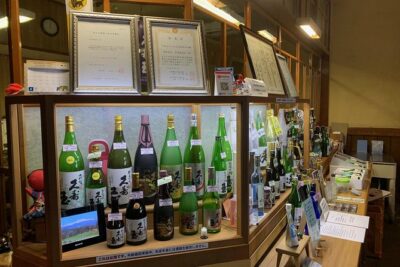
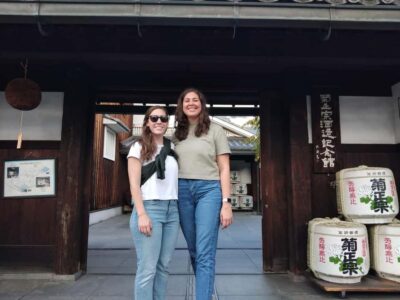
Fukui’s sake scene is best understood face-to-face, not as a checklist. Kubota Liquor Store is a long-established shop founded in 1914 (Taisho 3), and it’s the first stop to make if you want Sabae’s local bottles. The tasting experience feels focused, not rushed, with snacks built in to keep things comfortable.
In This Review
- Key things to know before you go
- Kubota Liquor Store in Sabae: a 1914 foundation for modern tasting
- The lacquered glasses: how shape changes aroma and flavor
- Pick your plan: junmai, daiginjo, or the hybrid flight
- Junmai plan
- Daiginjo plan
- Hybrid plan
- What actually happens during the 1-hour tasting
- Snacks and pacing: the quiet skill of not rushing
- English guide option: what’s included and what costs extra
- Price and value: $19.51 for a structured comparison
- Who this suits best (and who might want a different plan)
- Book it or skip it? My decision rule
- FAQ
- Where is the tasting held?
- How long does the tasting last?
- What types of sake can I try?
- What’s included in the price?
- Is an English guide included?
- Is this experience private?
- What happens if weather is bad?
Key things to know before you go
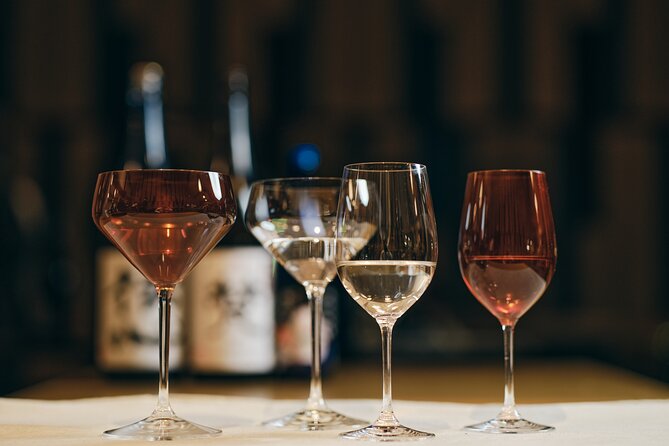
- Lacquered glassware built for sake: each style of glass is shaped for how junmai and daiginjo should be experienced
- Three plan options: junmai plan, daiginjo plan, or a hybrid plan for more pours
- 2 glasses + 1 snack vs 4 glasses + 2 snacks: your choice changes the pacing and how much you sample
- About one hour on site: it’s short enough to fit into a day without taking over your whole schedule
- Private group format: only your group participates, so you can move at your own comfort level
Kubota Liquor Store in Sabae: a 1914 foundation for modern tasting
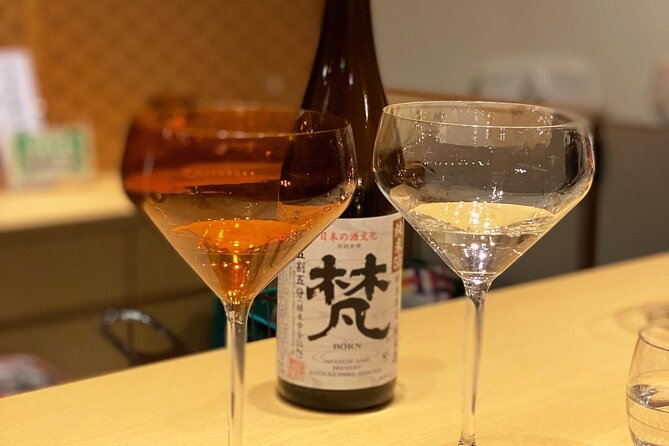
This tasting centers on Kubota Liquor Store, a long-running shop in Sabae, Fukui. The store traces its founding to 1914 (Taisho 3), which matters because it explains the tone of the experience: practical, local, and built around real purchasing and real drinking culture.
You’ll meet at 1-chōme-1-4 Asahimachi, Sabae, Fukui 916-0025, Japan. It’s also marked as being near public transportation, which is a big deal in Japan when you don’t want to waste the best part of your evening on last-mile logistics.
I like that the experience is tightly focused on taste, not a museum-style lecture. You’re there for sake in special lacquered glasses, and the shop setting helps you feel connected to how locals actually treat this as a normal part of life—not a rare event.
The lacquered glasses: how shape changes aroma and flavor
Here’s the core idea: the glasses aren’t just pretty. They’re designed specifically for the type of sake you’re drinking, and that design affects what you notice first.
For the junmai tasting glasses, the opening is wide. That wide mouth matters because it lets the full flavor profile come through more openly, instead of forcing everything through a narrow opening.
For the daiginjo tasting glasses, the opening is slightly narrower. That helps trap aroma, so you’re more likely to pick up fragrant notes as you lift the glass and take a sip.
The daiginjo glass also has a deeper, characteristic shape. Even if you don’t know the technical terms, you’ll feel the difference in the way aroma shows up. It’s a simple experiment you can do with your senses—one that doesn’t require any prior knowledge.
Pick your plan: junmai, daiginjo, or the hybrid flight
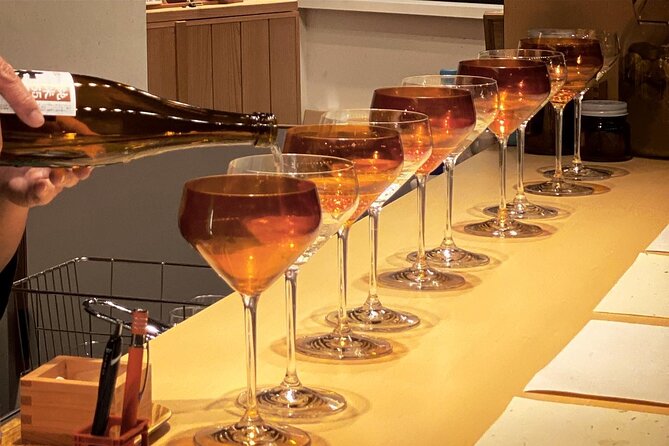
You get to choose between three tasting plans, and that choice affects how quickly you learn and how much you sample.
Junmai plan
The junmai plan includes two glasses of junmai sake plus one snack. If you’re newer to sake, this can be a friendly way to start because you get enough pours to notice patterns without overwhelming your palate.
Daiginjo plan
The daiginjo plan includes two glasses of daiginjo sake plus one snack. This option leans into aroma first, thanks to the glass design that helps keep fragrance closer to your nose.
Hybrid plan
The hybrid plan is the “try more, compare more” route. You get four glasses of sake plus two snack items, letting you contrast styles in a tighter window.
I like the hybrid option because it turns the tasting into a direct comparison. You can focus on what changes between junmai character and daiginjo aroma rather than trying to remember too much between long gaps.
One practical consideration: your group choice matters for pacing. With more glasses in the hybrid plan, you’ll want to stay relaxed and give yourself time between sips.
What actually happens during the 1-hour tasting
This experience is about one hour long, and it’s structured around the glassware and your plan selection. There aren’t multiple stops—this is a one-location tasting with a clear flow.
You’ll begin at the meeting point inside the shop area (the experience ends back at the same place). From there, the tasting focuses on:
1) choosing your plan (junmai, daiginjo, or hybrid)
2) pouring and tasting from the lacquered glasses designed for each style
3) eating the included snack(s) alongside your sips
Even without a lot of formalities listed, you can expect the experience to be guided by the shop’s setup and the way the glasses are used. The design differences between the wide and narrower openings should become obvious as you taste.
The snack portion is small but useful. It’s included, which helps you keep the tasting comfortable, especially if you’re not used to drinking sake in general.
Because it’s short, it’s also easier to fit into your day. You can do it as an afternoon reset or as an early evening stop before dinner, as long as you don’t plan anything too demanding right after.
Snacks and pacing: the quiet skill of not rushing
The experience includes snacks, with the exact amount depending on your plan. The junmai and daiginjo plans come with 1 snack each, while the hybrid plan includes 2 snack items.
This matters because sake tasting can move fast if you let it. Snacks help you slow down without killing the mood. They also give you a chance to clear your palate between glasses, so the next pour lands with more meaning.
If you’re someone who likes to take notes or compare aromas, this setup is forgiving. You’re not expected to do anything complex; you just need to pay attention to how the glass changes what you experience in each sip.
A small practical tip: pace yourself. The point is comparison, not speed.
English guide option: what’s included and what costs extra
The base price includes alcoholic beverages and snacks. An English guide is listed as not included, at ¥20,000.00 per booking.
So if you want full English support during the tasting, budget for that add-on. If you’re comfortable with basic drink vocabulary and pointing, you might be fine without it, but it depends on how much you want to understand the nuances.
This is worth thinking about because the whole point of the experience is the difference between junmai and daiginjo presentation. Better language support can help you get more out of those glass-shaped aroma and flavor effects.
Price and value: $19.51 for a structured comparison
At $19.51 per person, this tasting is priced to feel accessible, especially because it includes both alcohol and snacks. The key value question is how many pours you receive in your chosen plan.
- Junmai plan: 2 glasses + 1 snack
- Daiginjo plan: 2 glasses + 1 snack
- Hybrid plan: 4 glasses + 2 snack items
If you think in simple terms, you’re paying for a guided tasting format plus intentionally designed glassware, not just buying drinks by the bottle. The lacquered glasses alone hint that you’re getting more than a casual pour at a bar.
The only added cost you might consider is the optional English guide. If you don’t need that, the base price is the main number you’ll deal with.
Also, the “private tour/activity” format can be a hidden value point. Your group only participates, which often leads to a smoother experience—less waiting, fewer interruptions, and a more comfortable pace.
Who this suits best (and who might want a different plan)
This tasting is ideal if you like sake and want to learn by doing. It’s especially good for people who appreciate small experiments: wide-mouth vs narrow-mouth glasses, then immediate sensory comparison.
It’s also a solid fit for couples and small groups who want something local and straightforward. Since it runs about an hour at one location, it works well if your travel day is already packed.
If you’re the kind of person who needs a large program—multiple venues, long storytelling, lots of sightseeing—you might find this too short. But if your goal is focused tasting in a real shop setting, the one-hour structure is a strength.
And since most travelers can participate, it’s generally approachable. Just remember you are drinking alcoholic beverages, so it’s best as a planned activity, not a last-minute rush.
Book it or skip it? My decision rule
I’d book this if you want a short, local sake experience with a clear purpose: taste Fukui sake using lacquered glasses designed for junmai and daiginjo. The plan options make it easy to match your curiosity—two pours if you want light sampling, or four pours if you want a real comparison.
I’d think twice if you need heavy English support and aren’t planning to add the guide fee, because the experience details are tied closely to the tasting method and glass design. Also, if your schedule can’t handle a one-hour window, it’s worth aligning your timing first.
If you’re in Fukui and you want an authentic shop-based sake stop that doesn’t drag, this is a strong pick.
FAQ
Where is the tasting held?
The experience starts at 1-chōme-1-4 Asahimachi, Sabae, Fukui 916-0025, Japan, and it ends back at the same meeting point.
How long does the tasting last?
The duration is about 1 hour.
What types of sake can I try?
You can choose plans to taste junmai sake, daiginjo sake, or both (hybrid plan).
What’s included in the price?
Alcoholic beverages (the sake tastings) and snacks are included.
Is an English guide included?
No. An English guide is not included, and the price is listed as ¥20,000.00 per booking.
Is this experience private?
Yes. It’s a private tour/activity, and only your group participates.
What happens if weather is bad?
The experience requires good weather. If it’s canceled due to poor weather, you’ll be offered a different date or a full refund.